

Mycoplasma Gallisepticum (MG)
A slow-burning bacterial respiratory disease that produces classic foamy eyes and a rattling chest. Birds carry it for life and shed it under stress.
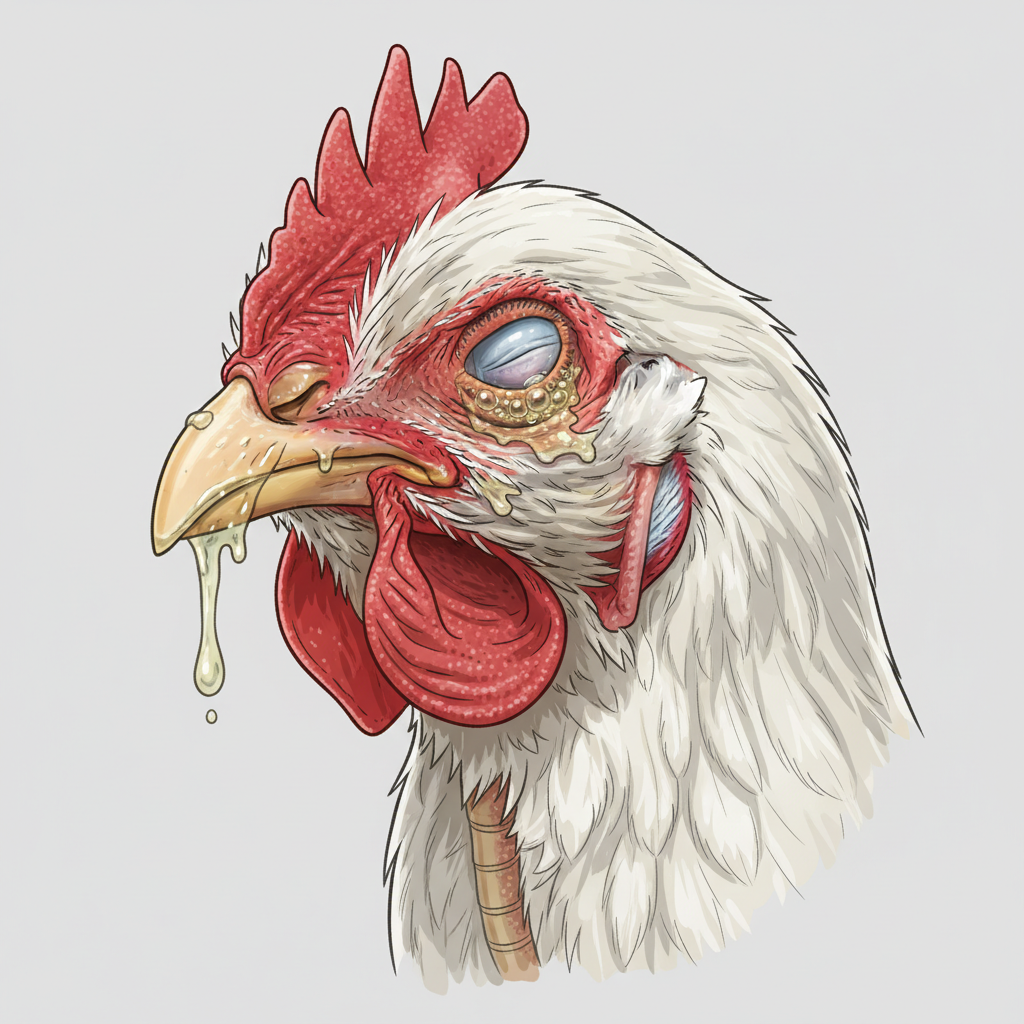
Mix of AI illustrations and anonymized real cases shared by community keepers. Visual severity varies by bird, age, and stage.
Symptoms
- Sneezing / coughing
- Wheezing / rattling breath
- Foamy or bubbly eyes
- Discharge from eyes or nostrils
- Swollen sinuses
- Drop in egg production
Treatment
Isolate sick birds. A vet may prescribe tylosin or tetracycline based antibiotics. Improve ventilation and reduce ammonia. Add vitamins and electrolytes to the water. Recovered birds remain lifetime carriers, plan accordingly.
Prevention
Buy only MG-clean stock from NPIP certified breeders. Quarantine new birds 30 days. Keep stress low (overcrowding, cold drafts, sudden diet changes trigger flare ups). Do not hatch eggs from known carriers.
Typical recovery
10 to 21 days with prompt care.
What an MG diagnosis means for your flock
Mycoplasma gallisepticum (MG) is a bacterial infection that causes chronic respiratory disease. It moves slowly compared with viruses, but it sticks around. Birds that recover usually stay carriers for life, and it can pass from hen to chick through the egg. That is why MG is a long-term flock decision, not just a sick bird.
Signs to watch for
- Foamy bubbles in the corner of the eye.
- Sneezing, nasal discharge and a swollen face around the eyes.
- Rattling or gurgling breath, especially on the roost at night.
- Drop in laying and weight loss over time.
- Signs that flare up with stress, cold or moving birds.
Step by step
- Separate birds with signs into a clean, well-ventilated space.
- Check the rest of the flock, especially eyes and breathing at dusk.
- Improve ventilation and reduce dust and ammonia. These make MG worse.
- Call an avian or poultry vet, or your extension office, about testing. A blood or swab test confirms MG.
- Stop adding, selling, hatching from or showing birds until you know.
How to tell this apart from look-alikes
Foamy eyes are a strong pointer to MG. A foul smell with a swollen face fits infectious coryza. Wrinkled eggs and watery whites alongside breathing signs fit infectious bronchitis. Bloody mucus suggests ILT. Many flocks have more than one infection at once, which is why testing helps.
Reporting and testing
MG is part of the National Poultry Improvement Plan testing that many hatcheries use, and some states track it. Ask your extension office or state veterinarian what applies where you live. If you buy chicks, look for sources that test for MG.
When to call a vet
Call if birds have trouble breathing, stop eating or lose weight, or when you first suspect MG. A vet can prescribe treatment that eases signs, but it does not clear the carrier state.
Supportive care
Fresh air without drafts, clean bedding, clean water and low stress. Wipe discharge from eyes and nostrils. Home remedies may make birds feel better but they do not cure MG.
Long-term decisions
Many vets suggest running a closed flock after MG. That means no new birds in and no birds out, and no hatching eggs to share. Some keepers choose to start over after a full clean-out. Talk options through with a vet.
Eggs and people
MG is not a known risk to people, and eggs are generally fine to eat. Do not hatch or share hatching eggs from infected hens, since MG passes through the egg. If birds are treated, check the product label or ask a vet about egg withdrawal. See the respiratory disease guide for more.
Common questions about mycoplasma in chickens
Can chickens recover from mycoplasma?
Signs often ease, but birds usually stay carriers for life.
How do chickens get MG?
From carrier birds, wild birds, contaminated equipment and through the egg from infected hens.
Can I add new birds to a flock with MG?
They will likely get infected. Talk to a vet before adding any.
