

Infectious Bronchitis (IB)
A very contagious coronavirus of chickens that causes mild respiratory signs in adults and lasting damage to the egg making system, soft or misshapen eggs are a giveaway.
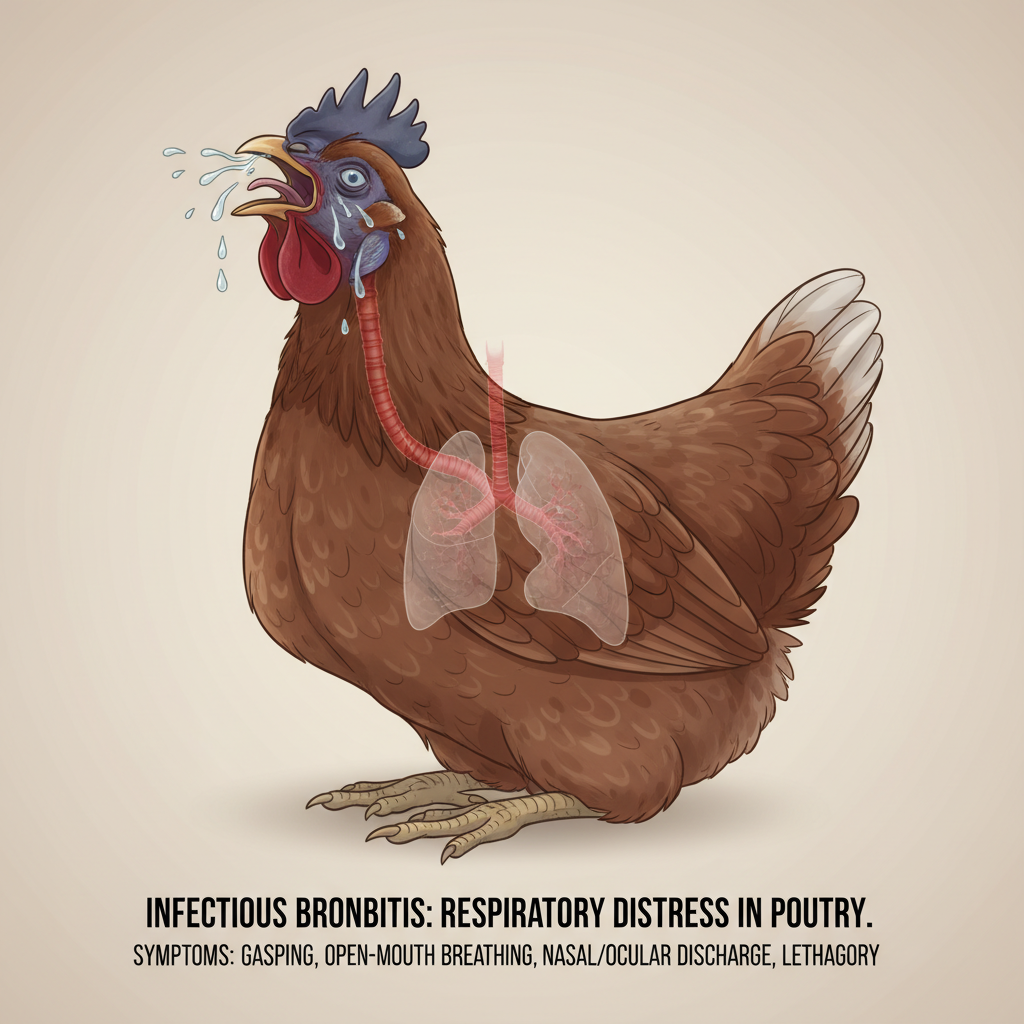
Mix of AI illustrations and anonymized real cases shared by community keepers. Visual severity varies by bird, age, and stage.
Symptoms
- Sneezing / coughing
- Wheezing / rattling breath
- Watery eyes
- Drop in egg production
- Soft or wrinkled egg shells
- Lethargic / not moving
Treatment
No antiviral cure. Supportive care only: warmth, hydration, electrolytes, vitamins, and clean dry bedding. Watch for secondary bacterial infections, those need vet treatment. Most adult birds recover in 2 weeks, chicks can die from suffocation.
Prevention
Vaccinate in high risk areas (talk to a local poultry vet). Strict quarantine on new birds. Disinfect equipment, the virus spreads on boots and hands. Maintain good ventilation without drafts.
Typical recovery
7 to 21 days with prompt care.
Managing infectious bronchitis in a backyard flock
Infectious bronchitis (IB) is a coronavirus of chickens. It is not the same as human coronaviruses and does not infect people. It spreads fast through the air and on equipment, and it can damage both the airway and the reproductive tract. In chicks it can be deadly. In laying hens it often shows up as a sudden drop in laying and poor quality eggs.
Signs to watch for
- Sneezing, coughing and rattly breathing, especially in young birds.
- Watery eyes and nasal discharge.
- A sudden drop in laying.
- Thin, wrinkled, misshapen or soft shells.
- Watery whites inside the eggs.
- Some strains affect the kidneys and cause wet droppings.
What to do
- Separate birds with breathing signs into a warm, clean, well-ventilated space.
- Check chicks closely. Keep them warm, since they get sick faster.
- Make sure every bird has easy access to water and food.
- Stop moving birds in or out.
- Call an avian or poultry vet or your extension office about testing.
How to tell this apart from look-alikes
IB, mycoplasma, coryza and ILT can all cause breathing signs. The egg changes are a strong pointer to IB. If you see wrinkled shells or runny whites across the flock, compare with wrinkled eggs and watery egg whites. A foul smell is more like coryza. Bloody mucus points to ILT. Sudden heavy deaths with breathing signs need reporting to your state veterinarian, since avian influenza and Newcastle disease can look like this at first.
When to call a vet
Call if chicks are sick, if birds are dying, or if you want a firm diagnosis. Testing is the only way to know for sure, and it helps you decide about vaccines.
Supportive care
There is no treatment that kills the virus. Antibiotics do not treat viruses, though a vet may use them for secondary infections. Keep birds warm, dry, and well ventilated with clean air. Offer water with poultry electrolytes. Reduce stress.
Prevention
- Vaccines for IB exist. Ask your hatchery or vet which ones fit your area, since there are many strains.
- Hold new birds apart for a month or so before they meet the flock.
- Keep wild birds away from feed and water.
- Use dedicated coop shoes. See the respiratory disease guide for more.
Eggs and the rest of the flock
Hens that had IB as chicks may lay poor shells for life even when healthy. Eggs from recovered hens are safe to eat if intact and clean. If a vet prescribes anything, check the product label or ask a vet about egg withdrawal. Wash hands after handling sick birds.
Common questions about infectious bronchitis
Is chicken infectious bronchitis contagious to humans?
No. It is a chicken virus and does not infect people.
How long does infectious bronchitis last?
Breathing signs often clear in a couple of weeks. Egg quality damage can last much longer.
Can vaccinated chickens get bronchitis?
Yes, if a strain differs from the vaccine, but vaccinated birds often get milder disease.
