

External Mites and Lice
Lice live on the bird, mites often live in the coop and feed at night. Heavy loads cause anemia (pale comb), feather damage, and a stressed flock that stops laying.
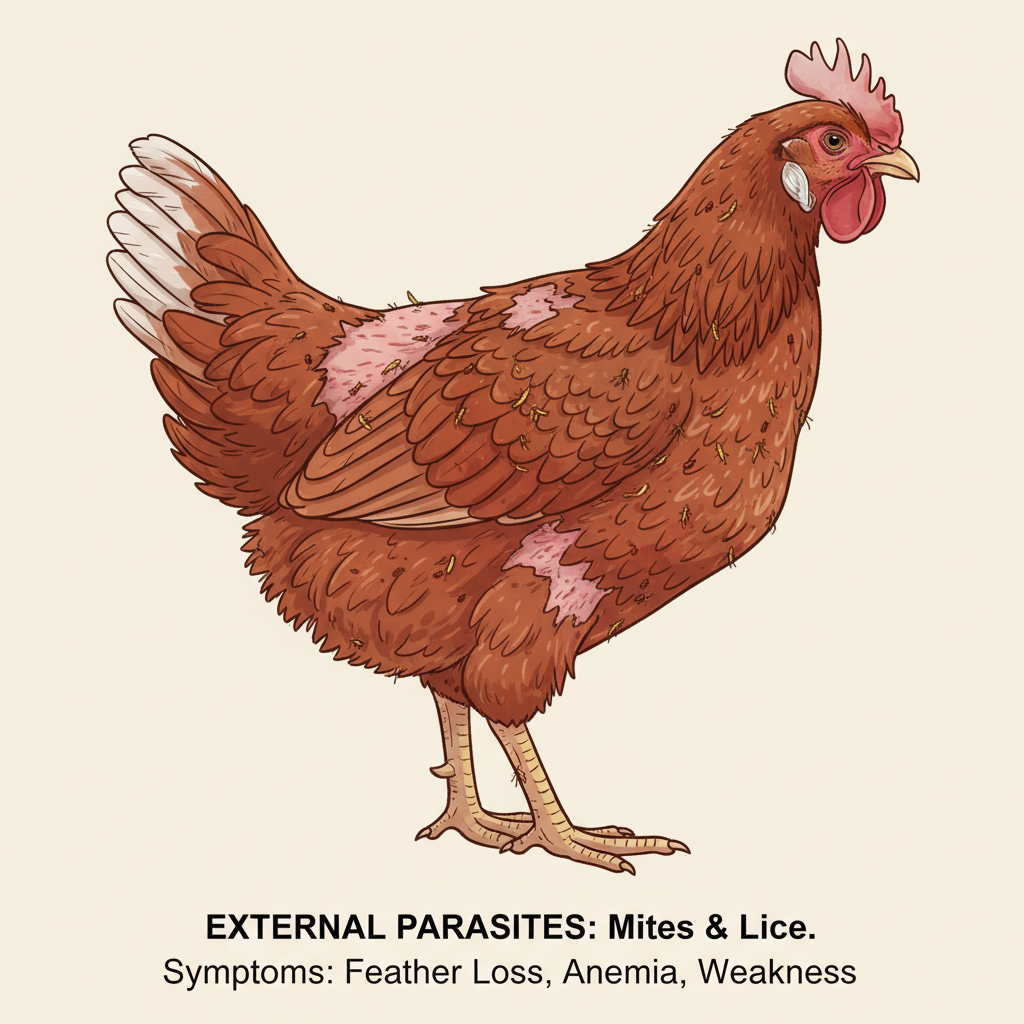
Mix of AI illustrations and anonymized real cases shared by community keepers. Visual severity varies by bird, age, and stage.
Symptoms
- Mites / lice visible
- Feather damage or bald patches
- Pale comb
- Restless at night
- Drop in egg production
- Weight loss
Treatment
Dust each bird with permethrin powder (avoid the face). Repeat in 7 to 10 days. Strip and burn or deep clean the coop, paying attention to roost ends and cracks. Permethrin the coop too. Permethrin has zero egg withdrawal in most regions, but verify locally.
Prevention
Provide a dust bath with dry dirt, sand, wood ash, and a sprinkle of DE. Inspect under wings and around the vent monthly. Clean the coop seasonally and treat roosts with permethrin once a year.
Typical recovery
7 to 21 days with prompt care.
A full plan for mites and lice in your flock
Almost every keeper deals with mites or lice at some point. They come in on wild birds, new flock members, used equipment and even on your clothes. A light load just makes birds itchy and scruffy. A heavy load can cause anemia, stop laying and kill chicks and broody hens. The key is to find them early and treat the birds and the coop together.
Know which pest you have
- Lice are straw colored, flat and fast. They live on the bird and eat skin and feather debris. Their eggs stick in white clusters at the base of feathers, often around the vent.
- Northern fowl mites are tiny dark specks that live on the bird. Look for dirty-looking, crusty feathers around the vent.
- Red mites hide in cracks in the coop by day and crawl onto birds at night to feed on blood. You often will not find them on birds in daylight.
Step by step
- Check every bird, ideally at night with a flashlight, around the vent, under the wings and on the head.
- Run a white paper towel along the underside of roosts after dark. Red smears mean red mites.
- Strip out all bedding and nest material and bag it.
- Scrub roosts, nest boxes and cracks. Pay attention to roost ends where red mites gather.
- Treat all birds with a product labeled for poultry, following the label for amount and timing.
- Treat the coop with a labeled product if you have red mites.
- Repeat as the label directs. Eggs hatch after the first round, so one treatment is rarely enough.
How to tell this apart from other problems
Feather loss with no pests is often molt or pecking, covered on feather loss. Crusty, raised leg scales are scaly leg mites, a different mite with different care. A pale comb can come from mites, worms or other causes. See anemia if birds look washed out.
When to call a vet
Call an avian or poultry vet if birds are weak, pale, losing weight or dying, if chicks are infested, or if pests keep coming back after proper treatment.
Prevention
- Check a few birds every week or two.
- Give birds a dry dust bath area. It helps them keep pests down, though it will not clear an infestation.
- Quarantine new birds for about a month and check them before they join the flock.
- Keep wild birds out of the coop.
- Use smooth, sealed roosts with fewer cracks for red mites to hide in.
Eggs and people
Many mite and lice products have rules about eggs. Check the product label or ask a vet about the egg withdrawal period. Poultry mites may bite people, but they do not live or breed on humans. Change and wash your clothes after a coop clean-out, and wash your hands.
Common questions about mites and lice on chickens
How do I know if my chickens have lice or mites?
Look at the vent and under the wings. Lice move fast and leave egg clusters. Mites are tiny specks and leave crusty feathers.
Can chickens get rid of mites on their own?
Dust bathing helps with light loads, but an infestation usually needs treatment.
Do I need to treat the coop for lice?
Lice live mostly on birds, but cleaning the coop and nests helps stop reinfestation.
