

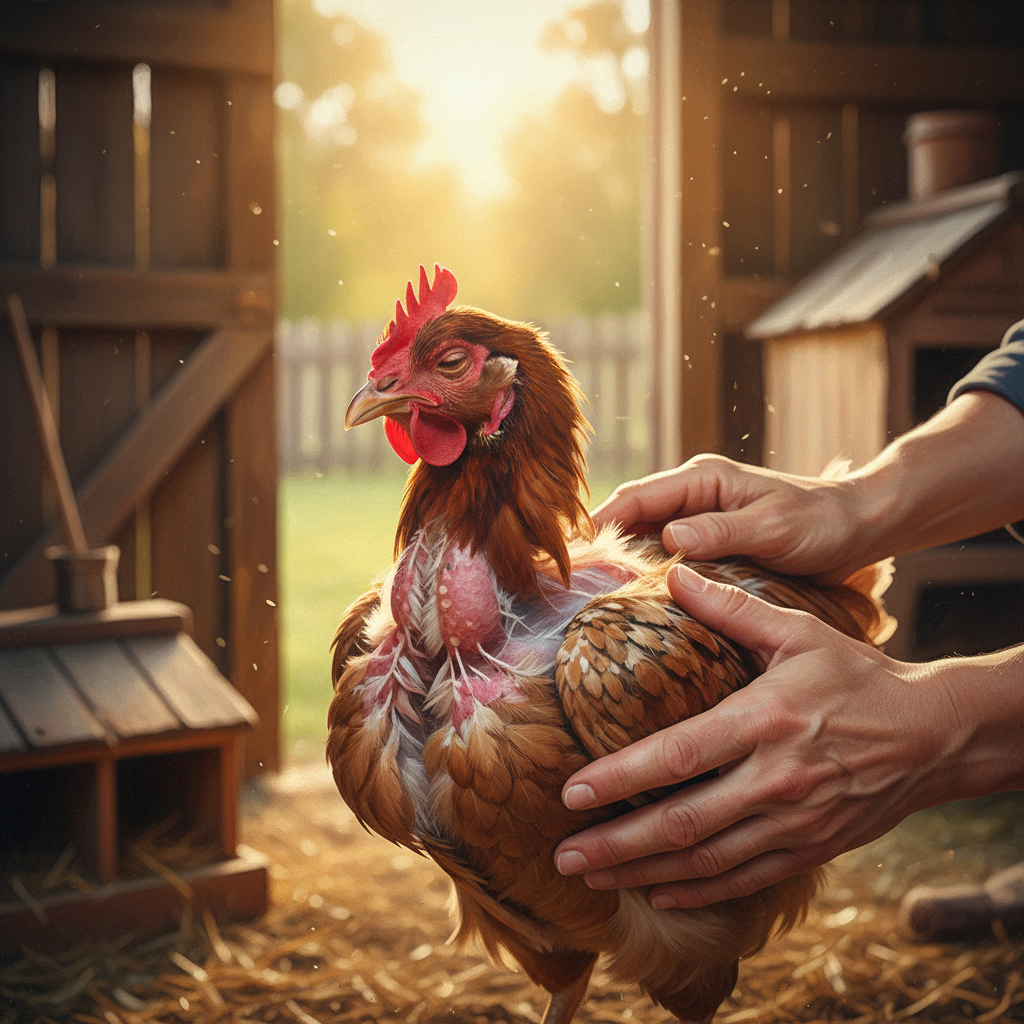
Why is my chicken losing feathers?
Most feather loss falls into one of three buckets: annual molt, parasites, or pecking. The pattern of loss tells you which.
Diagnose your chicken in 30 seconds
Upload a photo + describe symptoms. Our AI vet returns likely causes, urgency, and home care.
Open AI Chicken DoctorMost likely causes
1. Annual molt
Once a year (usually fall), hens drop feathers in a predictable pattern starting at the head/neck. Egg laying pauses.
2. Mites or lice
Feather loss with visible pests or dark clumps at feather bases, especially around the vent.
3. Pecking and bullying
Bald patches on the back, near the vent, or wherever others can reach. Often single hen affected.
4. Broody plucking
Hens pluck their own breast feathers to line a nest. Bare belly, will sit on eggs.
5. Roosters mating
Bare backs/shoulders on hens from rooster claws. Use hen saddles if it's bad.
6. Protein deficiency
Too many treats or low-protein feed. Feathers regrow poorly after molt.
What to check first
- Pattern: head-first and symmetric (molt), random with bald spots (bullying), or behind the head/back (rooster damage)?
- Part feathers, visible pests or egg clusters?
- Bare belly + sitting on nest = broody.
- Pin feathers (new feathers in tubes) coming in?
- Recent diet changes or lots of treats?
Home care that works
- During molt: switch to 20%+ protein feed; offer extra mealworms and scrambled eggs; reduce stress.
- For mites: dust with permethrin (see mites guide).
- For bullying: separate the victim; identify and rehome or isolate the bully; add visual barriers.
- For rooster damage: hen saddles or temporarily separate the rooster.
- Stop excess treats and confirm feed is 16-20% protein.
Call a vet if
- Bald, bloody patches not healing.
- Sudden total feather loss out of season.
- Hens losing weight along with feathers.
Frequently asked questions
How long does a chicken molt last?
Hard molts last 6-12 weeks. Soft molts (just a few feathers at a time) are barely noticeable.
Will molted feathers grow back?
Yes, new feathers come in as pin feathers within days and fill out over weeks. Just don't handle her roughly while they're growing.
Related symptoms
Sorting molt from mites, pecking and stress
Feather loss has a handful of common causes, and where the feathers are missing tells you a lot. Molt is normal. Parasites, bullying and over-mating are fixable once you know which one you are dealing with.
Look at the pattern
- Feathers everywhere on the coop floor, new pin feathers coming in, laying stopped. That is molt.
- Bare back and back of the head in hens with a rooster. That is mating damage.
- Bare vent area, scabby skin, crawling specks. Check for mites and lice.
- Broken feathers, bare spots on the back or tail, one bird always picking. That is feather pecking.
- Bare breast on a broody hen. She pulled them to warm the eggs.
What to do
- Check each bird at night with a flashlight. Part feathers at the vent and under the wings.
- Look at the roost for red mites in cracks.
- Watch the flock for a bully.
- Check the feed protein. Layer feed with treats kept low is the base.
- Look for open skin. Separate any bird with a wound, since red skin draws pecking.
When to call a vet
Call if bare skin is red, swollen or weeping, if a bird has deep wounds, or if she is losing weight and the cause is not clear.
Helping regrowth
Extra protein helps during molt. A hen saddle can protect a hen's back from a rooster. Handle molting birds gently, as new pin feathers bleed easily if bumped.
Eggs and hygiene
Feather loss alone does not affect eggs. If you treat for mites, check the product label or ask a vet about egg withdrawal.
Common questions about chickens losing feathers
Why is my chicken losing feathers in fall?
Most likely the annual molt. It is normal and usually lasts several weeks.
Can stress cause feather loss?
Yes. A big scare can cause a partial molt.
Will feathers grow back?
Yes, usually after the next molt or once the cause is fixed.
