

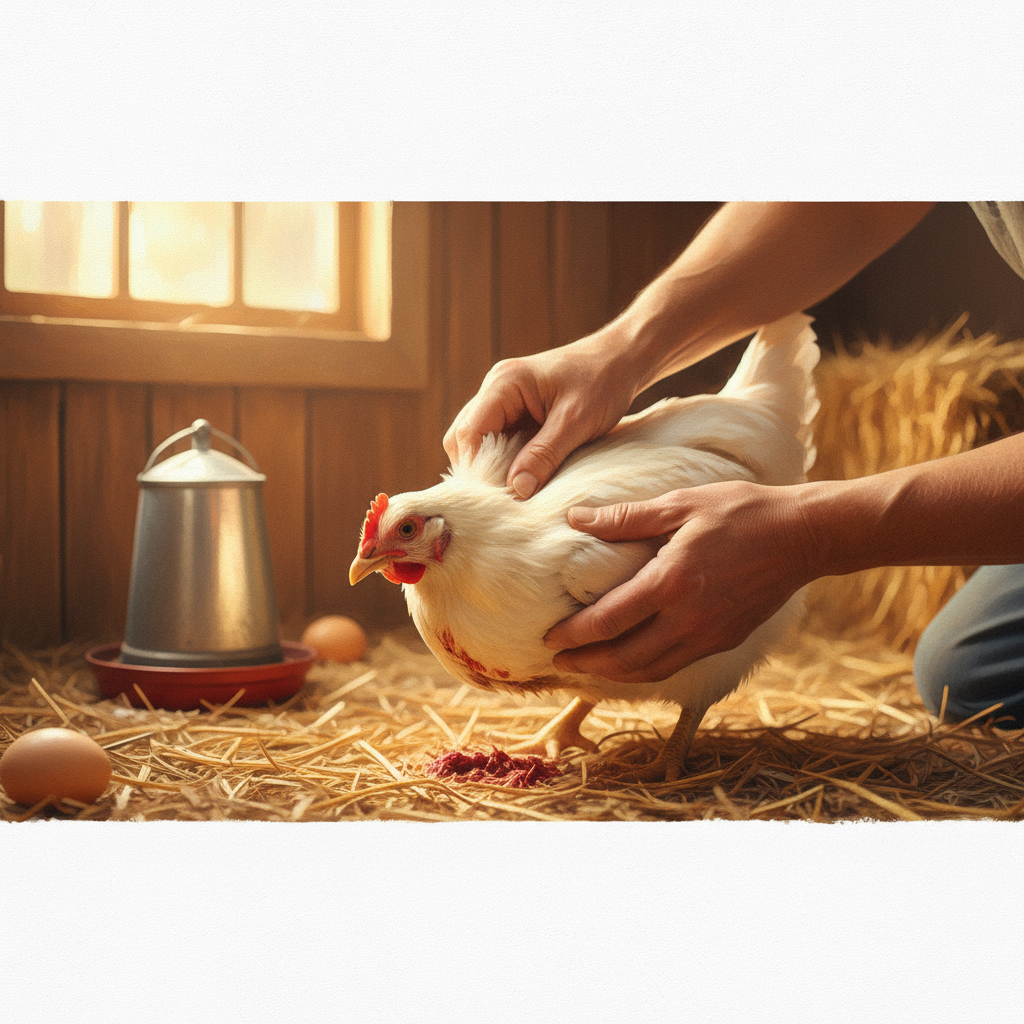
Why does my chicken have bloody droppings?
Frank blood in droppings is almost always coccidiosis in young birds. It's treatable, but every hour matters once symptoms show.
Diagnose your chicken in 30 seconds
Upload a photo + describe symptoms. Our AI vet returns likely causes, urgency, and home care.
Open AI Chicken DoctorMost likely causes
1. Coccidiosis
Parasitic infection of the gut lining. Most common in 3-16 week old chicks but can hit any age under stress.
2. Vent injury or pecking
Bright red blood on the outside of otherwise normal droppings often means a vent wound from pecking or a recent egg.
3. Cecal shedding (normal!)
Once or twice a day chickens pass a brown, soft, sometimes blood-tinged cecal dropping. This is normal.
4. Worms (heavy load)
Cecal worms or capillaria can cause blood-flecked droppings plus weight loss.
What to check first
- Is the blood mixed throughout (internal, coccidia) or on the outside (vent injury)?
- Age of the bird, chicks 3-16 weeks are highest risk for coccidia.
- Other birds affected?
- Any orange or red shedding of intestinal lining?
- Hunched posture, fluffed feathers, refusal to eat?
Home care that works
- Start Corid (amprolium) immediately at the outbreak dose: 1.5 tsp liquid per gallon for 5 days, then 1/3 tsp for 7-14 days.
- Treat the entire flock, coccidia spread fast.
- Replace bedding completely and remove wet/soiled areas daily for 2 weeks.
- Offer electrolytes and probiotic-fortified water.
- Do NOT feed medicated starter while treating with Corid, the medication competes.
Call a vet if
- Bird is lethargic, not eating, or weak.
- No improvement after 24 hours on Corid.
- Chicks dying suddenly.
Frequently asked questions
How do I tell normal cecal poop from blood?
Cecal droppings are dark brown to greenish-brown, soft, and pungent, and only happen once or twice a day. True blood is bright red streaks or clots in/on multiple droppings.
Will Corid hurt my chickens if it's not coccidiosis?
No, Corid is safe to use even if you're wrong, it's vitamin B1 blockade. But add a B-complex supplement for a few days after the course ends.
Related symptoms
What to do when you see blood in the droppings
Blood in chicken droppings, especially in birds under a few months old, often means coccidiosis, and it can move fast. Act the same day. Not every red dropping is blood though, so look carefully first.
Is it really blood?
Chickens sometimes shed bits of intestinal lining that look orange, red and stringy. One of those in a healthy bird is normal. Red from beets or berries is also harmless. Real trouble looks like fresh red blood or dark tarry droppings, along with a dull, hunched bird.
Step by step
- Separate any bird that is fluffed up, hunched or not eating.
- Look at the rest of the flock, especially young birds.
- Check the brooder or coop for wet, dirty bedding around the waterer.
- Replace wet bedding and clean waterers.
- Call a vet or feed store about a coccidiosis treatment and follow the label exactly.
The coccidiosis page covers prevention and treatment in more depth.
Look-alikes
Blood on the eggshell is from the vent, not the gut, and is covered on blood on egg shells. A wound near the vent can also leave blood on droppings. Severe worm loads can cause blood too, and a fecal test sorts this out.
When it is an emergency
Chicks with bloody droppings can die within days. Call right away if a bird is collapsing, if several are sick, or if you are not seeing improvement soon after starting treatment. Unexplained deaths are worth a necropsy at your state lab.
Eggs and hygiene
Coccidia do not infect people, but other germs in droppings can. Wash hands after handling birds and bedding. If you treat laying hens, check the product label or ask a vet about egg withdrawal.
Common questions about bloody chicken droppings
Can adult chickens get coccidiosis?
Yes, though it is more common in young birds. Stress, wet bedding and new birds raise the risk.
Is intestinal lining in poop normal?
Occasional orange or red stringy tissue in a healthy bird is normal shedding.
Does medicated feed stop all coccidiosis?
It helps chicks build immunity but does not guarantee it. Keep bedding dry too.
