

Vent Prolapse
Part of the reproductive tract pushes outside the vent. The exposed tissue attracts pecking, which can kill the hen quickly. Isolate first, treat second.
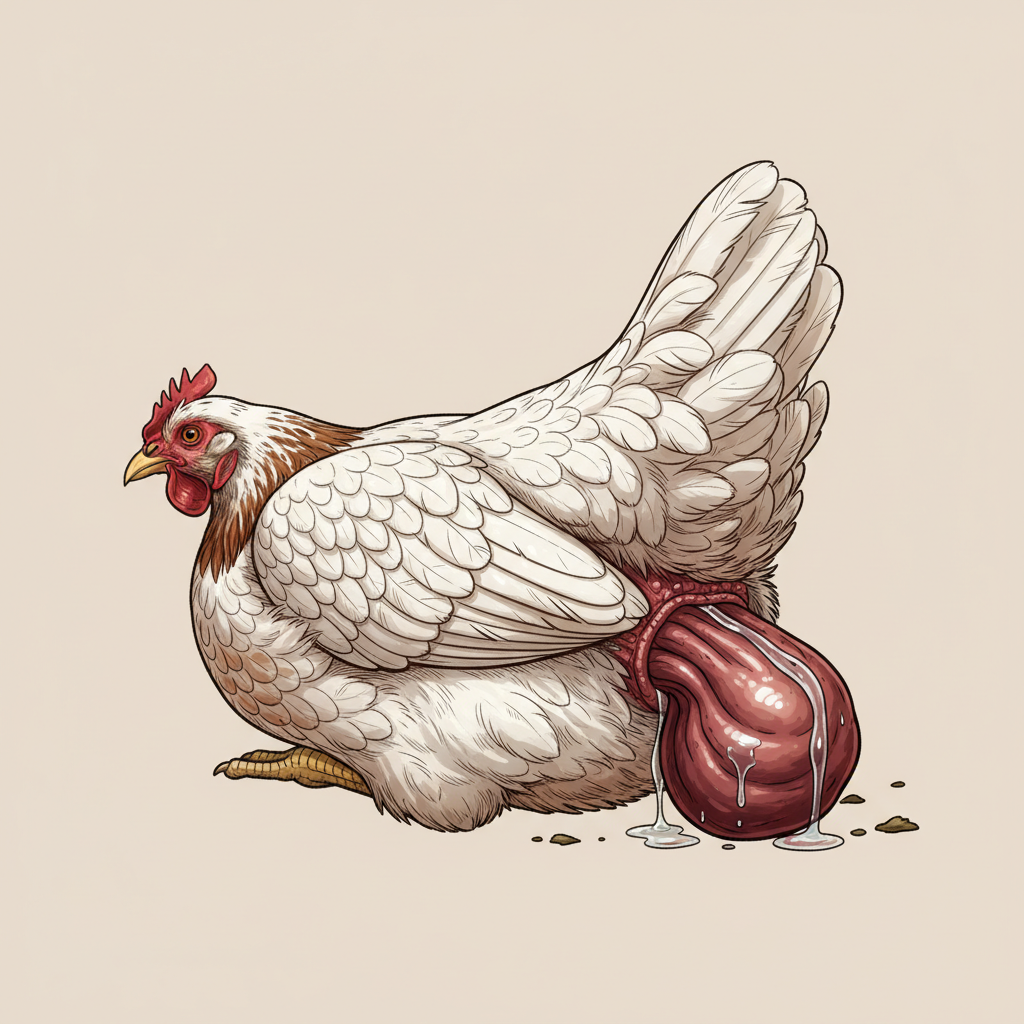
Mix of AI illustrations and anonymized real cases shared by community keepers. Visual severity varies by bird, age, and stage.
Symptoms
- Red tissue out of vent
- Bleeding from vent
- Straining to lay
- Pecking from flockmates
- Lethargic / not moving
Treatment
Isolate immediately, flockmates will peck the red tissue. Clean the exposed tissue with warm saline, then apply preparation H or sugar to reduce swelling. Gently push the tissue back inside with a gloved finger. Keep the hen in a dim quiet space. A vet visit is strongly advised.
Prevention
Avoid early forcing of pullets into lay with too much light. Manage weight. Address chronic egg binding early. Trim vent feathers in fluffy breeds.
What to do when tissue is coming out of the vent
A vent prolapse is when the inside of the cloaca or the end of the oviduct pushes out through the vent. You see red or pink, wet tissue. It often follows straining to lay a large egg, egg binding, or a hen who is overweight or laying very hard. It is urgent, and the biggest immediate danger is other chickens pecking at it.
Right now
- Separate her from the flock immediately. Red tissue draws pecking, and it can turn fatal fast.
- Put her in a warm, quiet, dim crate. Darkness helps slow laying.
- Rinse the tissue gently with warm water or saline to remove dirt and droppings.
- Check for an egg stuck inside or behind the tissue. Do not try to break or pull it.
- Keep the tissue moist and clean. A water-based lubricant helps.
- With a gloved, lubricated finger, you can try to gently ease the tissue back in. Do not force it.
- Call an avian or poultry vet.
When it is an emergency
Call a vet right away if the tissue will not stay in, if it looks dark, dry, purple, torn or has been pecked, if there is a stuck egg, or if the hen is weak. Damaged or dying tissue needs a vet. A vet may stitch the vent partly closed for a while or use a hormone implant to stop laying while she heals.
How to tell this apart from look-alikes
A swollen, crusty, smelly vent without tissue pushing out is more likely vent gleet. Straining with nothing showing and a hard lump inside is egg binding, which can lead to prolapse. Bleeding near the vent from flock mates picking is covered under cannibalism and pecking.
Supportive care while she heals
- Keep her alone and in low light for days or longer.
- Offer plain layer feed, oyster shell and fresh water. Cut out treats to slow laying.
- Check the vent at least twice a day and clean it.
- Ask a vet before applying any cream or ointment. Some products sold for people are not safe for birds.
Prevention
- Keep hens at a healthy weight. Treat-heavy diets cause obesity.
- Feed complete layer feed with oyster shell on the side so shells and muscles work well.
- Let pullets start laying at their natural pace rather than adding sudden light.
- Control pecking by giving enough space and things to do.
The flock and the eggs
Prolapse is not contagious. A hen who has had one may prolapse again, so watch her when she comes back into lay. Eggs that touched the prolapsed tissue should be thrown out. If a vet treats her with medication, check the product label or ask the vet about egg withdrawal. Wear gloves and wash your hands after handling her.
Common questions about vent prolapse
Can a prolapsed vent heal on its own?
Mild cases sometimes go back in with care and rest. Many need a vet, especially if it keeps coming out.
What causes vent prolapse in hens?
Straining from large eggs, egg binding, obesity and heavy laying are the most common causes.
Can a hen lay eggs after a prolapse?
Often yes, but some hens prolapse again. A vet can advise on pausing laying.
