

Infectious Laryngotracheitis (ILT)
A severe herpesvirus that attacks the windpipe. Classic signs are gasping, neck stretching, and coughing up bloody mucus. Often fatal. Survivors stay lifetime carriers.
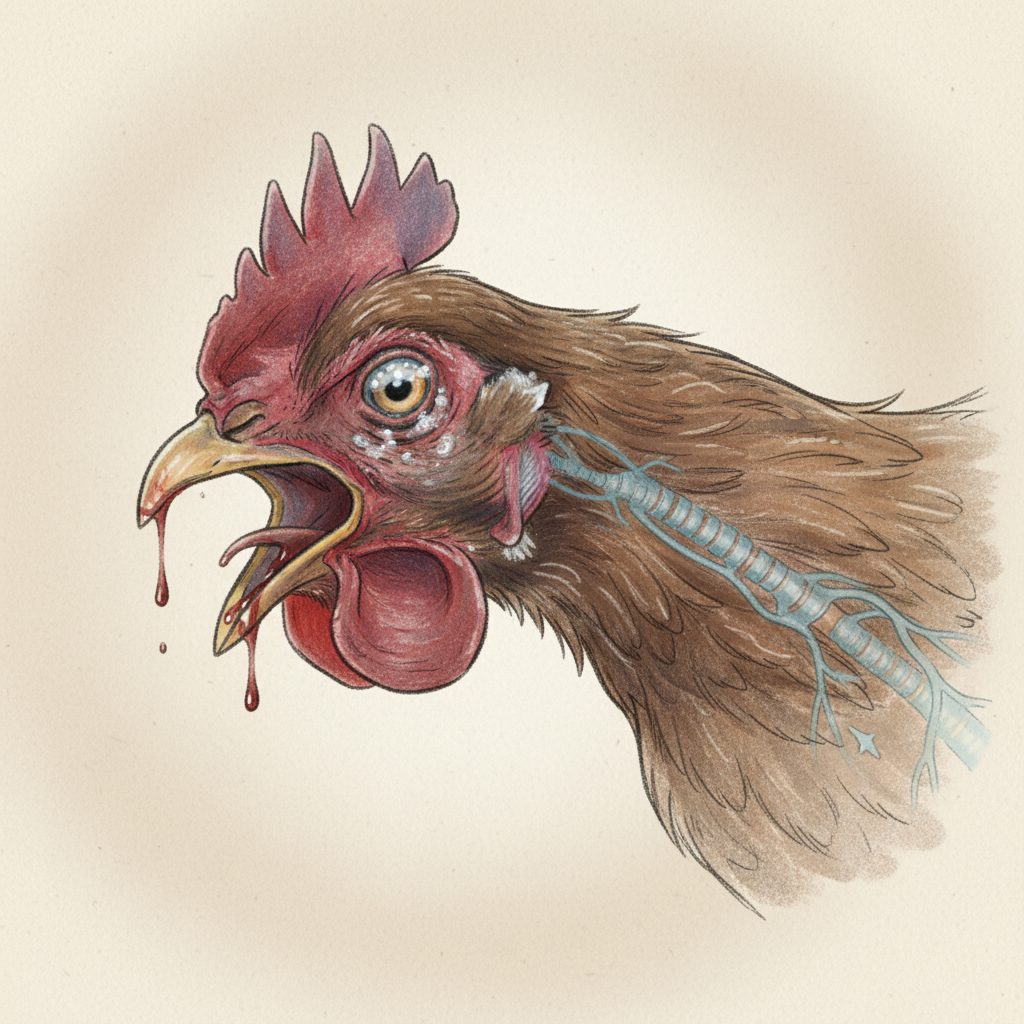
Mix of AI illustrations and anonymized real cases shared by community keepers. Visual severity varies by bird, age, and stage.
Symptoms
- Gasping / open mouth breathing
- Head stretching to breathe
- Bloody mucus or coughing blood
- Wheezing / rattling breath
- Eye discharge
- Sudden death
Treatment
Call a vet immediately. There is no specific antiviral. Supportive care, warm, humid, low stress environment, separate sick birds. Vaccination of unaffected flockmates can slow spread but must be vet directed. Be ready for losses.
Prevention
Strict biosecurity. Do not visit other flocks during outbreaks. Vaccinate in high risk regions. Quarantine recovered birds for life, they shed the virus when stressed. Cull severely affected birds humanely to reduce flock suffering.
What to do if you suspect ILT
Infectious laryngotracheitis (ILT) is a herpesvirus that attacks the windpipe. In bad outbreaks, birds gasp, stretch their necks to breathe and cough up bloody mucus. Milder strains look more like a lingering cold. Birds that recover, and birds given some types of vaccine, can carry the virus for life and shed it when stressed. Many states treat ILT as a reportable disease.
Signs to watch for
- Gasping, with the neck stretched up and the beak open.
- Coughing, sometimes with a honking or gurgling sound.
- Bloody mucus on the beak, face, feathers or coop walls.
- Watery eyes and swollen eyelids in milder cases.
- Drop in laying, lethargy, and deaths in severe outbreaks.
Step by step
- Call your state veterinarian, a poultry vet or your extension office. Testing confirms ILT and tells you what rules apply in your state.
- Separate sick birds into a calm, well-ventilated space.
- Stop all movement of birds, eggs and equipment off the property until you have advice.
- Keep visitors away, and do not visit other flocks.
- Keep any dead birds cold, not frozen, in case a lab wants to test them.
How to tell this apart from look-alikes
Bloody mucus is the strongest clue for ILT. Yellow cheesy patches in the throat can be wet fowl pox. Wrinkled eggs and watery whites with breathing signs point more to infectious bronchitis. A foul smell with a swollen face fits coryza. Sudden heavy losses can also be avian influenza or Newcastle disease, which is why a lab test and a call to officials come first. The coughing page compares these.
When it is an emergency
Gasping birds are in real distress. Call right away if birds are struggling to breathe or dying. Do not try to clear the throat with your fingers or a swab. You can cause bleeding or push mucus further in.
Supportive care
There is no cure for the virus. Keep birds calm, warm and in clean, moving air. Offer water and soft food. A vet may suggest treatment for secondary infections. Home remedies do not cure ILT.
Prevention and long-term choices
Vaccines exist, but vaccinated birds can become carriers, so they are usually used where ILT is already a problem. Talk to your vet or state officials before vaccinating. Quarantine new birds for about a month and buy from tested sources. If your flock had ILT, a closed flock is often recommended. See the Defend the Flock page for biosecurity basics.
Eggs, people and the flock
ILT does not infect people. Still wash hands and change clothes after handling sick birds so you do not carry the virus to other flocks. Ask officials about selling or sharing eggs during an outbreak. If a vet treats your birds, check the product label or ask the vet about egg withdrawal.
Common questions about laryngotracheitis
Is ILT reportable?
In many states, yes. Contact your state veterinarian or extension office to find out.
Can chickens recover from ILT?
Many do, but survivors usually become carriers.
How does ILT spread?
Through the air, on people, shoes and equipment, and from carrier birds.
