

Heat Stress
Chickens cannot sweat. Above 90 F they pant and dump heat through their comb. Heavy birds, dark feathered birds, and those with large fluffy bodies are most at risk.
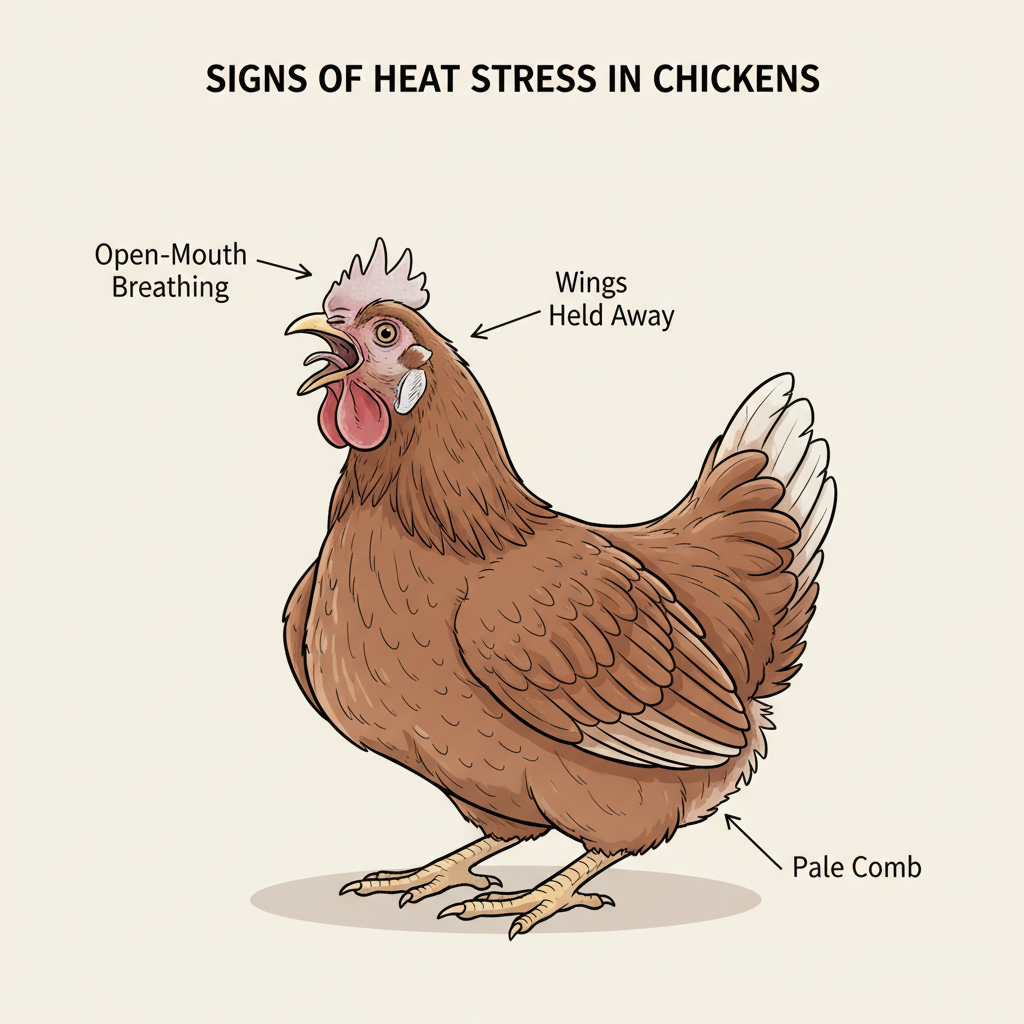
Mix of AI illustrations and anonymized real cases shared by community keepers. Visual severity varies by bird, age, and stage.
Symptoms
- Panting / open mouth breathing
- Wings held away from body
- Pale comb
- Lethargic / not moving
- Drop in egg production
- Sudden death
Treatment
Move the bird to deep shade or air conditioning. Dip feet in cool (not cold) water. Offer cool electrolyte water. For severe cases, mist the bird gently. Do not submerge a heat stroked bird in ice water, the shock can kill her.
Prevention
Provide deep shade. Add ice blocks to waterers. Offer frozen treats (watermelon, peas). Use shallow pans of cool water for foot dips. Run a fan in the coop. Ventilate the roost area.
Cooling a chicken in heat stress, step by step
Chickens do not sweat. They cool off by panting and holding their wings away from their bodies. When it gets too hot, especially with high humidity, they cannot shed heat fast enough. Heat stress can kill birds within hours, and heavy breeds and older birds are most at risk.
Signs to watch for
- Panting with the beak open.
- Wings held out from the body.
- Pale comb and wattles.
- Lethargy, standing still, eyes closing.
- Not eating, and fewer or thin-shelled eggs.
- Stumbling, collapse or seizures in severe cases.
What to do right now
- Move the bird to shade or a cool, airy place indoors.
- Offer cool, clean water. Not ice cold.
- Stand her feet and legs in cool water, or wet her legs, comb and under the wings. Do not dunk her whole body in cold water, as that can cause shock.
- Run a fan nearby for airflow.
- Add poultry electrolytes to the water if you have them.
- Check the rest of the flock. If one bird is in trouble, others may be close.
How to tell this apart from look-alikes
Heat panting is fast and quiet. Gurgling, rattling or sneezing points to a respiratory problem covered on wheezing. A lethargic bird in cool weather is not heat stressed, so look at other causes on lethargy. Several birds dying suddenly in hot weather with no panting, or with swelling and purple combs, should be reported to your state veterinarian.
When it is an emergency
A bird that has collapsed, is having seizures, or does not respond needs cooling right away and a vet if one is reachable. Birds that recover may stay weak for a day or two, so keep them quiet.
Prevention
- Plenty of shade in the run, through the hottest part of the day.
- More waterers in summer, kept in the shade and refilled with cool water.
- Good coop ventilation, so heat escapes at night.
- Frozen treats like chilled fruit help a little.
- Avoid scratch grains in the afternoon, since digesting them adds body heat.
- Do not handle or move birds in the heat of the day.
The water and hot weather guide covers how much they drink.
The flock and the eggs
Heat stress is not contagious, but it affects the whole flock at once. Expect laying to drop and shells to thin during heat waves. Collect eggs more often in hot weather and refrigerate them quickly. Eggs from heat-stressed hens are safe if they are collected fresh and clean.
Common questions about heat stress in chickens
How hot is too hot for chickens?
It depends on humidity, breed and shade. Watch the birds. Open-beak panting and spread wings mean they are struggling.
Should I give my chickens ice water?
Cool water is best. Very cold water or ice baths can shock an overheated bird.
Do chickens stop laying in the heat?
Many lay less and lay thinner shells during hot spells.
