

Aspergillosis (Brooder Pneumonia)
A fungal lung infection from inhaled Aspergillus mold spores in damp bedding or moldy feed. Often hits chicks in brooders. No discharge, unlike bacterial respiratory disease.
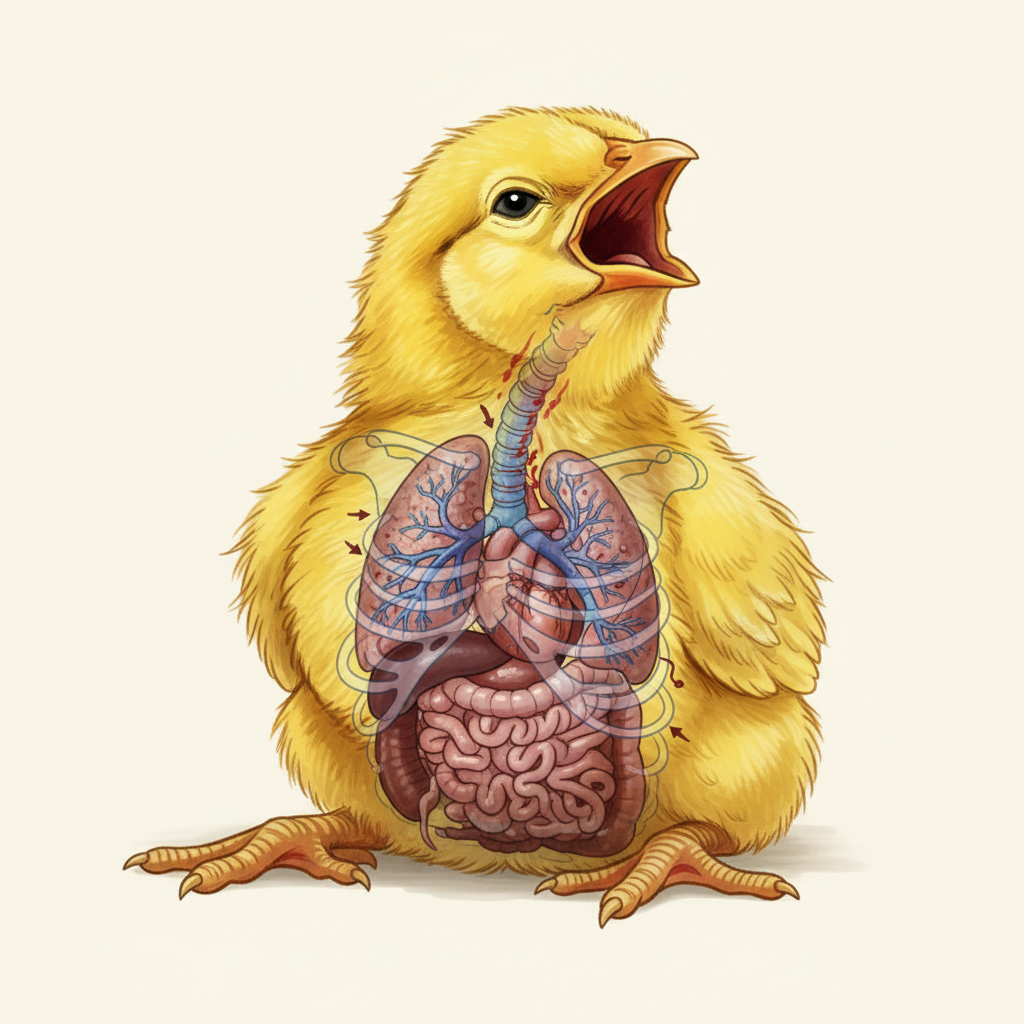
Mix of AI illustrations and anonymized real cases shared by community keepers. Visual severity varies by bird, age, and stage.
Symptoms
- Gasping / open mouth breathing
- Wheezing / rattling breath
- Lethargic / not moving
- Not eating
- Sudden death in chicks
Treatment
Remove the moldy source immediately and clean the brooder. Move surviving birds to fresh, dry bedding. Antifungals exist but treatment is hard. Supportive care: warmth, hydration, nutrition. Severely affected birds rarely recover.
Prevention
Keep bedding bone dry. Throw out musty or clumped feed. Never use moldy hay or straw. Clean brooders between batches. Avoid wood shavings that are damp or dusty.
What to do if you suspect aspergillosis
Aspergillosis is a fungal infection of the lungs and air sacs. It comes from breathing in spores of Aspergillus mold, which grows in damp bedding, moldy feed and wet litter. It is most common in young chicks, which is why it is called brooder pneumonia, but older birds can get it too, especially if they are stressed or living in damp, dusty conditions.
Signs to watch for
- Gasping, open-beak breathing or rapid breathing.
- Lethargy, sitting fluffed up, or chicks huddling and not eating.
- Drinking more than usual.
- In older birds, a slow decline with breathing trouble and weight loss.
- Sometimes twisted necks or wobbliness if the infection reaches the brain.
Step by step
- Remove every bit of damp or moldy bedding and feed right away.
- Clean and dry the brooder or coop thoroughly before adding fresh, dry bedding.
- Check feed bags and feeders for clumps, musty smells or visible mold, and throw out anything suspect.
- Move sick birds to a clean, dry, well-ventilated space.
- Call a vet to confirm what you are dealing with.
How to tell this apart from other breathing problems
Aspergillosis does not spread from bird to bird the way viral or bacterial respiratory diseases do. Birds get it from the environment. So if several birds sharing the same moldy bedding get sick, but there is no sneezing, nasal discharge or bubbly eyes, mold is a likely culprit. Sneezing, discharge and foamy eyes fit other infections more, covered on the wheezing and sneezing pages. Heavy panting in hot weather is heat stress.
When to call a vet
Call an avian or poultry vet as soon as you see gasping, especially in chicks. Aspergillosis is hard to treat once it is established, and a vet or state lab can confirm it, often by necropsy of a bird that has died. Knowing the cause stops you from treating for the wrong thing.
Supportive care
Keep the bird warm, calm and in clean, fresh air. Offer water and easy feed. Home remedies do not clear a fungal lung infection, and treatment, if any, has to come from a vet.
Prevention
- Keep bedding dry. Change wet spots under waterers daily.
- Store feed in a sealed, dry container and buy only what you will use in a few weeks.
- Never use moldy hay or straw for bedding.
- Ventilate well. The ventilation guide explains how much airflow a coop needs.
People, eggs and the rest of the flock
The same mold can affect people, especially those with weak immune systems or lung conditions. Wear a dust mask when cleaning out moldy bedding, and wash up afterwards. Healthy birds in the flock are not at risk from the sick bird itself, only from the moldy environment. If a vet prescribes treatment, check the product label or ask the vet about eggs.
Common questions about aspergillosis in chickens
Is aspergillosis contagious between chickens?
No. Birds catch it from mold in the environment, not from each other.
Can chickens recover from aspergillosis?
Some mild cases do, but established infections are hard to treat. Prevention matters most.
What bedding causes aspergillosis?
Any bedding that stays damp and grows mold, including wet straw, hay and shavings.
