

Swedish Flower Hen
Also known as Skansk blommehona
Also known as: Skansk blommehona
Is the Swedish Flower Hen right for you? Take the Breed Matcher →About the Swedish Flower Hen
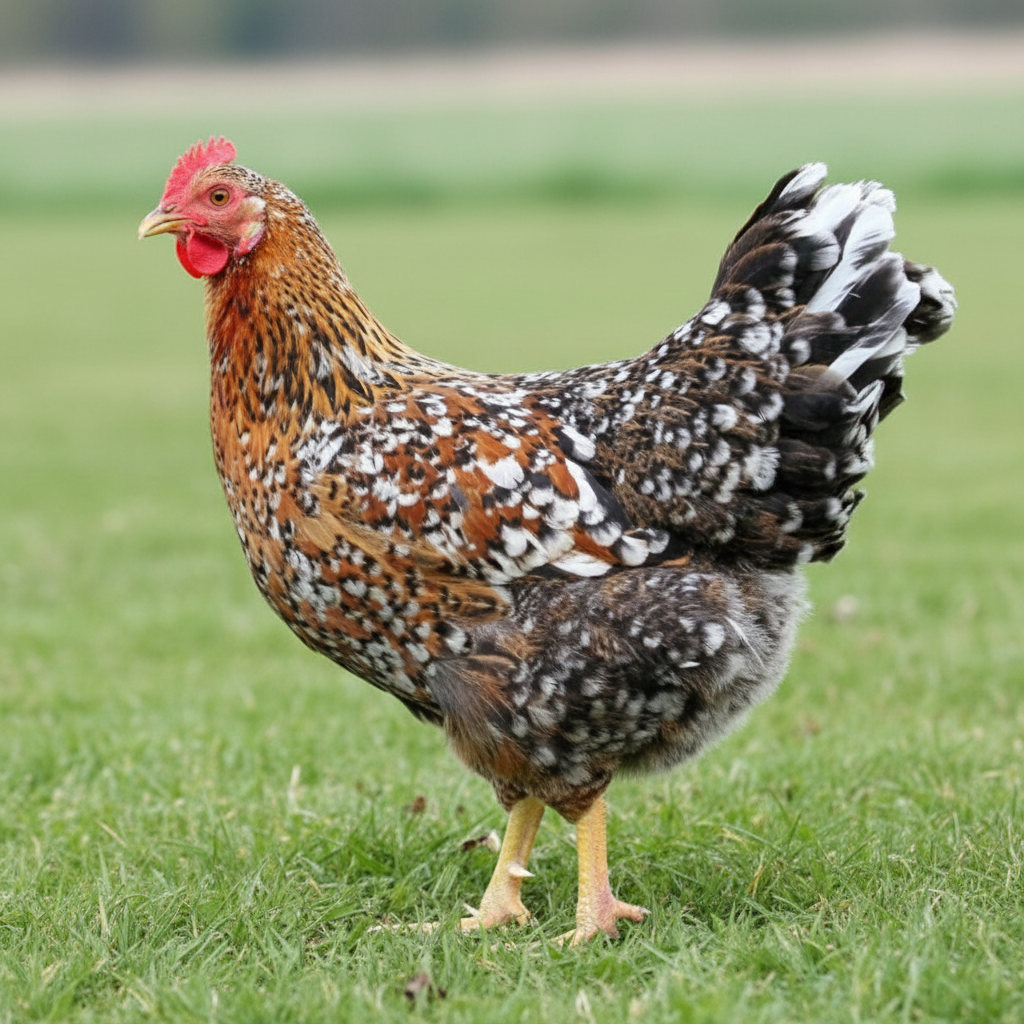
The Swedish Flower Hen displays a kaleidoscope of feather colors, often with patterned markings. They have a friendly and curious temperament, making them a pleasant addition to backyard flocks. Each bird is distinct in appearance, showcasing the breed’s landrace heritage. Their good foraging abilities contribute to their adaptability in various environments.
History
This breed originated in Sweden, primarily in the Skåne region. Developed over centuries, they were valued for their hardiness and dual-purpose capabilities. The breed faced decline due to industrial farming practices, leading to efforts for its conservation in recent years.
Care tips
Swedish Flower Hens thrive in free-range environments due to their foraging instincts. They are generally hardy, adapting well to cooler climates but benefit from protection in harsh weather. Known for their mothering abilities, hens may go broody and can successfully raise chicks. Provide ample space for roaming to prevent boredom.
Color varieties
Fun facts
- Each Swedish Flower Hen has a unique feather pattern and color.
- They are known for their exceptional foraging skills.
- This breed is part of conservation efforts due to its endangered status.
- Swedish Flower Hens are friendly and adapt well to family settings.
What to expect from Swedish Flower Hens
The Swedish Flower Hen is a landrace from Skåne in southern Sweden. That means it developed over centuries on farms through natural selection and farmer choice, not to a show standard. Its Swedish name means something like Skåne flower hen. By the late 1900s the breed was close to disappearing, and Swedish conservation work saved it. It was imported to the US in the early 2010s and has become popular since.
The flower pattern
The name comes from the white tips scattered across the feathers, which look like flowers in a field. Base colors vary a lot, from black and blue to red, buff and gray. Some birds have small crests and some do not. No two look quite alike, and the white spotting usually increases with each molt, so a bird can look quite different at three years than at one.
Day to day
Swedish Flower Hens are generally friendly, curious and calm. Many become very tame with handling. They are active foragers and are happiest with room to roam, where they find a lot of their own food. They are not usually aggressive, and roosters are often described as reasonable. They are medium-sized birds, lighter than heavy American breeds.
Laying pattern
Expect cream to light brown eggs at a good rate for a landrace. They are steady layers and often keep going into cooler months. Some hens go broody and make good mothers, as you would expect from a farm breed. Like most hens they slow down with age.
Climate notes
Coming from Sweden, they are cold-hardy. The single comb can still get frostbite in very cold weather, especially on roosters, so keep the coop dry and ventilated. They are fairly adaptable to warmer climates as well, with shade and water.
Crested birds
Birds with crests need a bit of extra checking. Crests can hold moisture and hide lice or mites. Most Swedish Flower Hen crests are small, so it is a lot less work than with a Polish or Silkie.
How they compare
The Icelandic chicken is another Nordic landrace with lots of color variety and strong foraging instincts, though it is smaller and lays white to light-tinted eggs. If you like the spotted look, the Speckled Sussex has a similar effect and is easier to find. Both breeds are calm and good layers. The Swedish Flower Hen has more color variety.
Where to get them
They are still not common, but supply has grown. A few US hatcheries now sell them, and many small breeders sell chicks and hatching eggs. Because it is a landrace, there is no single correct look, so focus on healthy, well-grown birds. Price is usually higher than for common breeds.
Who they suit
Swedish Flower Hens suit keepers who want something a little unusual but still easy, with good laying and friendly birds. They are a good fit for free-range setups in cooler climates. If you only want maximum eggs, a production breed will lay more. Check our list of breeds for cold climates for more options like it.
Common questions about Swedish Flower Hens
Are Swedish Flower Hens rare?
They are less rare than they were, but they are still uncommon compared with mainstream breeds.
Do Swedish Flower Hens breed true?
Their offspring look like Swedish Flower Hens, but colors and crests vary a lot, as you would expect from a landrace.
Are Swedish Flower Hens friendly?
Most are. They tend to be curious and tame, especially if handled from a young age.
