

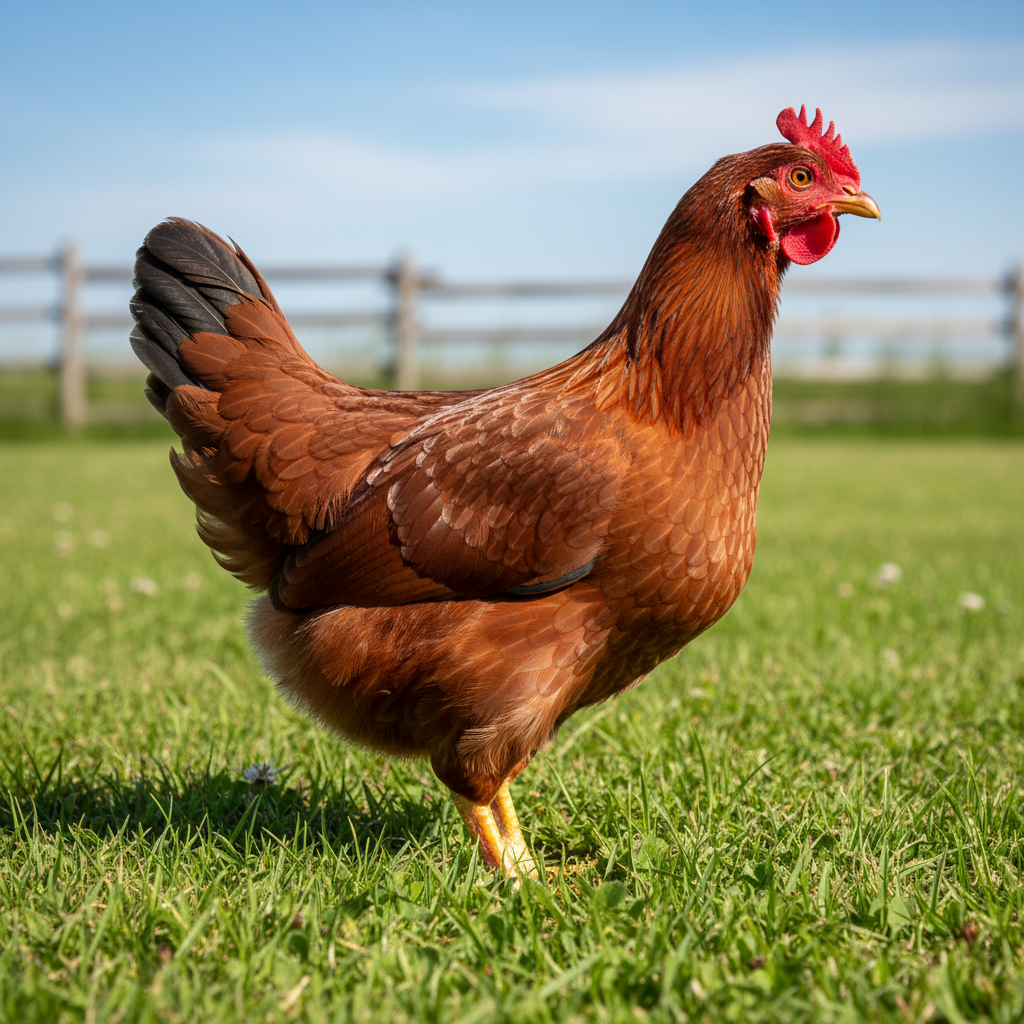
Rhode Island Red Bantam
Mini version of the famous RIR.
Is the Rhode Island Red Bantam right for you? Take the Breed Matcher →About the Rhode Island Red Bantam
Rhode Island Red Bantams are small, hardy birds with deep red plumage and a calm demeanor. They are known for their friendly nature, making them a favorite among backyard keepers and families. Their compact size distinguishes them from the standard Rhode Island Reds, while still retaining excellent egg-laying capabilities. These bantams are also good foragers and adapt well to various living conditions.
History
The Rhode Island Red Bantam was developed in the early 20th century in the United States, originating from the standard Rhode Island Red breed. As poultry keepers sought smaller, easier-to-handle birds for backyard flocks, the bantam version gained popularity, particularly in exhibitions and for home use.
Care tips
Rhode Island Red Bantams are known for their hardiness and can thrive in various climates with adequate shelter. They tend to be broody, often wanting to raise their own chicks, so providing nesting boxes can encourage this behavior. Due to their small size, they require less space than standard breeds, making them ideal for smaller backyards.
Color varieties
Fun facts
- Rhode Island Red Bantams are excellent foragers, enjoying a diverse diet.
- They are known for their friendly and calm temperament, great with kids.
- Despite their small size, they can produce a good number of eggs.
- They are hardy in various climates and can adapt to cold temperatures.
Keeping Rhode Island Red bantams
The Rhode Island Red bantam is a miniature version of the large Rhode Island Red. It has the same dark red color, blocky shape and single or rose comb, in a body only a fraction of the size. It is recognized as a bantam variety, not as a separate breed.
What changes with the smaller size
Bantam RIRs eat less, need less coop and run space, and are easier for kids to pick up. They lay small brown eggs, so it takes about two to equal one large egg. Production is decent for a bantam but nowhere near a production RIR. Hens are more likely than hatchery large fowl to go broody, and they make protective mothers.
Personality
They have the same confident attitude as the big birds. Hens can be bossy, and bantam roosters are often feisty. In a mixed flock they hold their own against larger hens. If you plan to keep a rooster, raise it with lots of handling.
Space and climate
They are a good fit for small yards and urban coops. Their small size means they lose heat faster than large birds, so keep the coop draft-free in winter and watch single combs in hard freezes. They handle heat well with shade. Bantams fly better than large RIRs, so a covered run helps.
Where to get them
Many US hatcheries sell RIR bantams. Show-quality birds with deep color and good type come from breeders, and RIR bantams are common at poultry shows.
Common questions about Rhode Island Red bantams
How big do Rhode Island Red bantams get?
They are a small fraction of the large breed's size, small enough to hold in one arm.
Do Rhode Island Red bantams lay well?
They lay a fair number of small brown eggs, less than large production Reds.
Can bantam RIRs live with large chickens?
Yes. They are confident and usually hold their own, though watch for bullying at first.
