

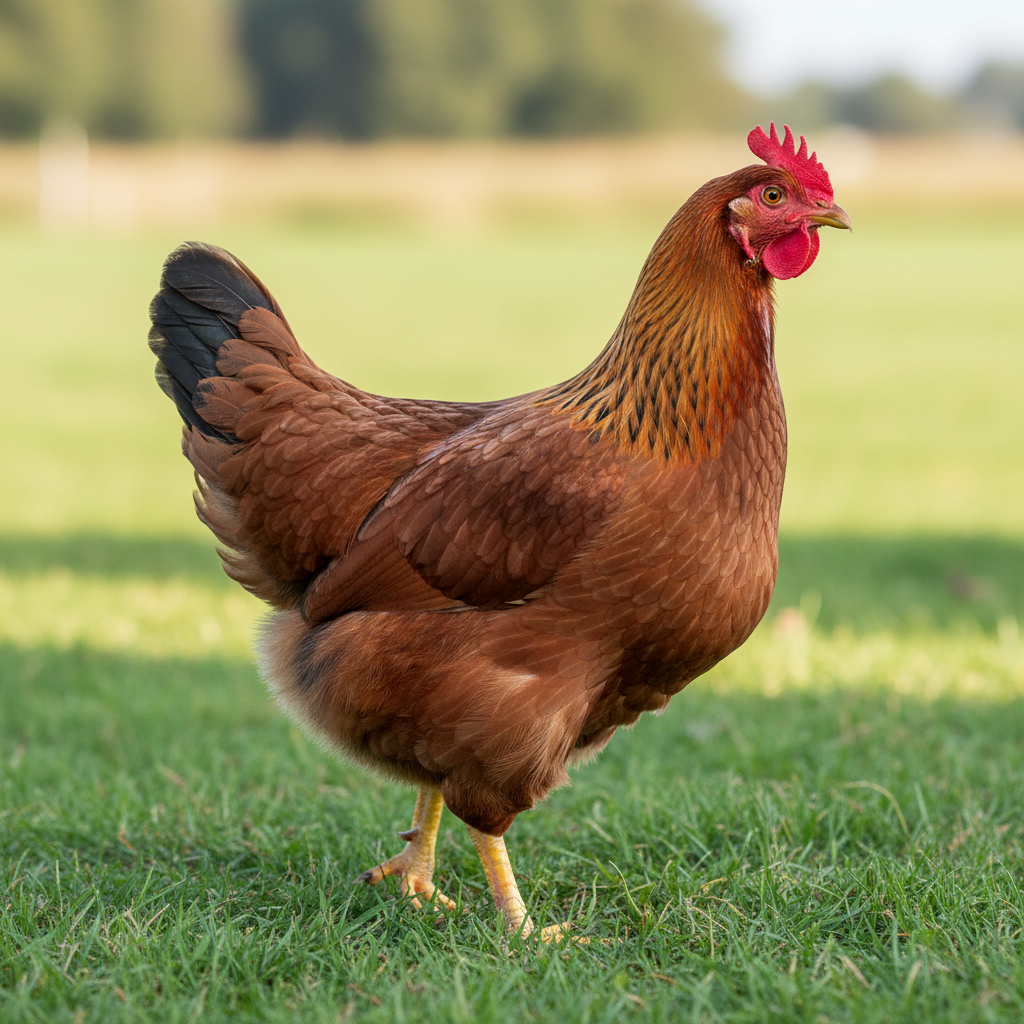
New Hampshire Red
Also known as New Hampshire
Also known as: New Hampshire
Is the New Hampshire Red right for you? Take the Breed Matcher →About the New Hampshire Red
New Hampshire Reds are medium-sized birds with rich red feathers and a robust build. They are known for their friendly and active nature, making them suitable for backyard settings. This breed matures faster than Rhode Island Reds and offers excellent egg production, typically laying medium to large brown eggs.
History
Developed in the 1930s in New Hampshire, this breed emerged from local Rhode Island Reds and other breeds. It quickly gained popularity due to its dual-purpose capabilities in both meat and egg production, leading to its spread across the United States.
Care tips
New Hampshire Reds are hardy birds that thrive in various climates, but they appreciate some shelter from extreme weather. They are not particularly broody, making them less reliable for hatching eggs, and they enjoy roaming space for foraging. Regular interaction can enhance their friendly disposition.
Color varieties
Fun facts
- New Hampshire Reds were developed in the 1930s as a faster-maturing alternative to Rhode Island Reds.
- They are known for their calm temperament, making them great for families and novice keepers.
- This breed performs well in free-range settings, taking advantage of their foraging instincts.
- New Hampshire Reds can lay over 200 eggs per year, making them prolific layers.
Keeping New Hampshire Reds
New Hampshire Reds started as Rhode Island Reds. Farmers in New Hampshire in the early 1900s selected their RIRs for fast growth, early maturity and strong bodies, and over time the birds became different enough to be their own breed. The American Poultry Association recognized the New Hampshire in the 1930s. Officially the breed is just called the New Hampshire, but most people add Red.
They are a lighter, more chestnut red than the dark mahogany of a heritage RIR. Hens often have a golden tone around the neck.
Day to day
New Hampshires are active, practical birds. Many are friendly and curious, though they can be competitive at the feeder. Like RIRs, they can be near the top of the pecking order. Roosters vary, from calm to pushy. They forage well and are happy on free range or in a run.
Laying through the seasons
Expect a good number of brown eggs. They usually start laying fairly early for a heavy breed, since that was one of the traits they were selected for. They tend to keep laying into winter better than many breeds, though shorter days and the molt will slow them. They are more likely than production RIRs to go broody, and they make decent mothers. The best laying years are the first two or three.
A meat and egg bird
Because they were bred to grow fast and feather out quickly, New Hampshires were once an important meat breed in the US before the modern broiler took over. Today they are still a good dual-purpose choice if you want a bird that does both jobs. They are on our list of dual-purpose breeds.
Space and climate
Standard large fowl space works. They are cold-hardy and do reasonably well in heat. The single comb is fairly large, especially on roosters, so frostbite is a risk in very cold winters. A dry, ventilated coop helps a lot.
Their role in sex links
New Hampshire roosters are one of the common fathers of red sex link hybrids. When crossed with certain silver or white hens, the chicks can be sexed by color at hatch. The Red Sex Link page covers those crosses. They were also used in creating the Delaware.
How they compare
Against the Rhode Island Red, the New Hampshire is lighter in color, matures a little faster, and is often a bit calmer and broodier. Production RIRs usually lay more eggs. Heritage RIRs and New Hampshires are closer in laying.
Where to get them
New Hampshires are sold by many US hatcheries and are fairly easy to find. Show-quality birds come from breeders. The breed has appeared on the Livestock Conservancy list in the past, so heritage lines are worth supporting. Be aware that some hatchery birds sold as New Hampshire Reds may be closer to production RIRs in type, so ask about the line if it matters.
Common questions about New Hampshire Reds
What is the difference between a New Hampshire and a Rhode Island Red?
New Hampshires are lighter red, were bred to mature faster, and are often broodier. RIRs, especially production strains, usually lay more.
Are New Hampshire Reds good layers?
Yes. They are good layers of brown eggs, and they hold up fairly well through winter.
Are New Hampshire Reds friendly?
Many are friendly and curious, though some are pushy with other chickens.
