

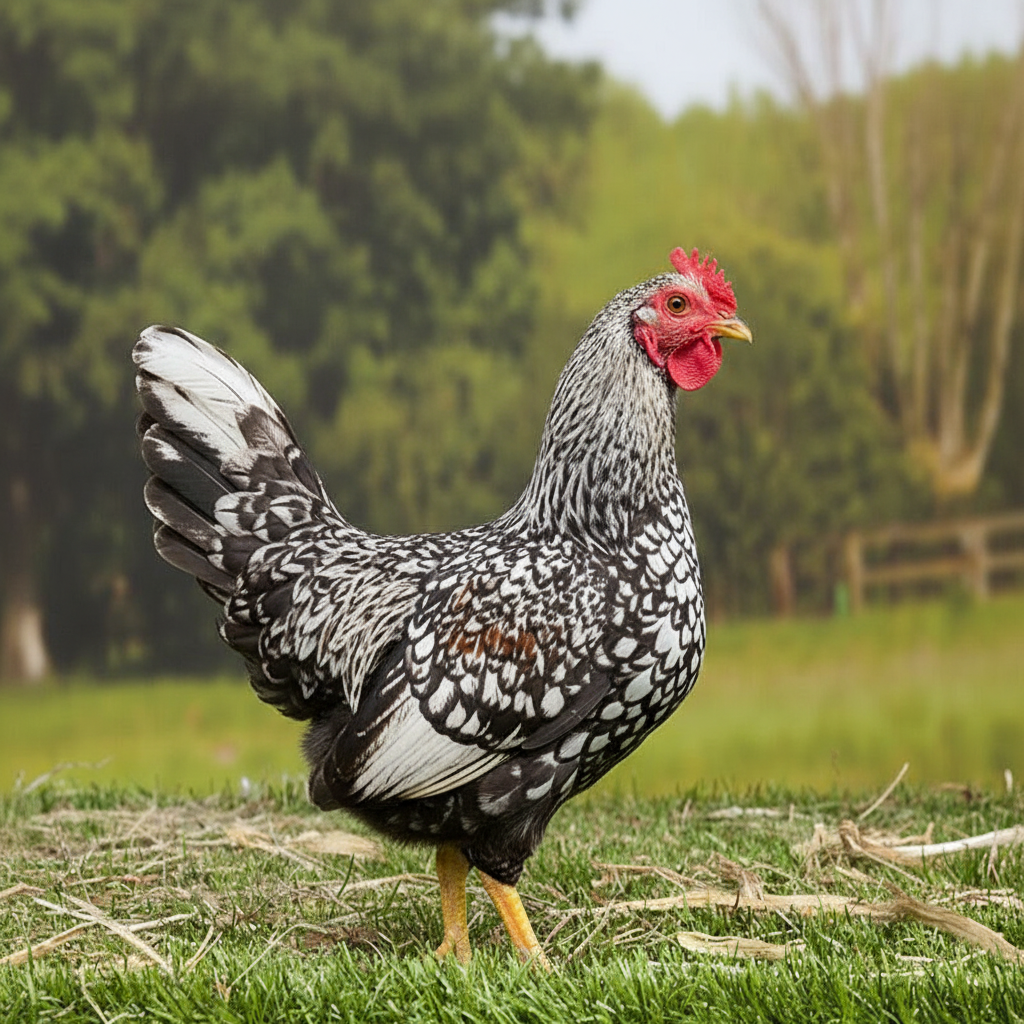
Mottled Japanese Bantam
The Mottled Japanese Bantam is a charming small breed known for its unique feather patterns.
Is the Mottled Japanese Bantam right for you? Take the Breed Matcher →About the Mottled Japanese Bantam
Mottled Japanese Bantams are distinguished by their striking feather patterns that feature a mix of black and white mottling. They have a small, upright body and a prominent crest, making them an attractive addition to any backyard. Known for their friendly and social nature, these birds are often kept for their ornamental value rather than for production. Their unique appearance and gentle temperament make them favorites among poultry enthusiasts.
History
The exact origins of the Mottled Japanese Bantam are unclear, but they are believed to have developed in Japan over several centuries. This breed likely descended from traditional Japanese bantams, which were bred for both beauty and companionship, eventually gaining popularity in other parts of the world as ornamental pets.
Care tips
Mottled Japanese Bantams are hardy birds that can adapt to various environments, but they thrive in spaces where they can roam freely. They are known to be good mothers and can be broody, so providing nesting boxes can help accommodate their natural behavior. Regular social interaction is necessary to keep these birds happy and healthy.
Fun facts
- Mottled Japanese Bantams have distinctive feather patterns that are unique to each bird.
- These birds are known for their playful and friendly behavior towards their keepers.
- They have a very calm disposition, making them excellent pets for families.
- Despite their small size, they are known for their strong personalities and curiosity.
What the mottled color means for Japanese Bantams
The Mottled Japanese Bantam is a color variety of the Japanese Bantam, also called the Chabo. The birds are black with white tips on many feathers, giving a speckled look. Underneath the color it is the same tiny, short-legged bantam with a big upright tail and a large single comb.
Mottling changes with age
Mottled birds often look darker when young and gain more white tips after each molt. A three year old bird can look much whiter than a pullet. This is normal for mottled breeds and does not mean anything is wrong.
Living with them
Japanese Bantams are mostly kept as pets and show birds. They are friendly, small and easy to tame. They lay small cream or tinted eggs and hens go broody often. Their very short legs mean their wings and tail nearly touch the ground, so a muddy run makes them dirty fast. Keep them on dry ground with good drainage.
The short leg gene
Short legs in Japanese Bantams come from a gene that is lethal when a chick gets two copies. When you breed two short-legged birds, part of the eggs will not hatch, and some chicks will have longer legs. That is normal for the breed, not a problem with your birds. The Scots Dumpy carries a similar short leg trait.
Climate notes
They tolerate heat well, but their small bodies and big single combs make them vulnerable to cold. Give a dry, draft-free coop and watch for frostbite on the comb.
Common questions about Mottled Japanese Bantams
Do Mottled Japanese Bantams get whiter?
Yes. White tips usually increase after each molt.
Are Japanese Bantams good layers?
Not really. They lay small eggs at a modest pace and are kept mostly for looks.
Why are some of my chicks long-legged?
Not every chick inherits the short leg gene. Long-legged chicks are normal in this breed.
