

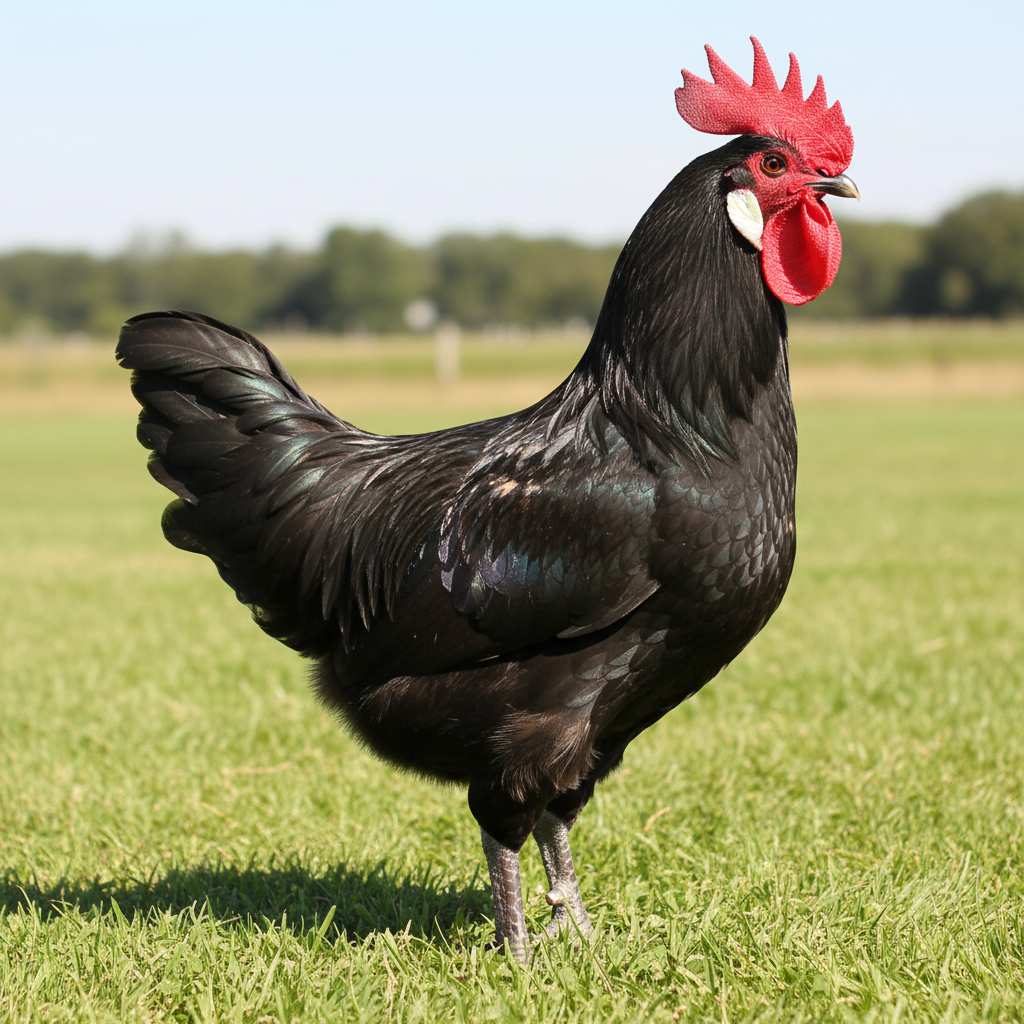
Minorca
Largest white-egg layer with massive comb and wattles.
Is the Minorca right for you? Take the Breed Matcher →About the Minorca
Minorca chickens are known for their striking appearance, featuring a large, upright comb and prominent wattles, which are particularly impressive in males. They have glossy black feathers and a robust stature, making them quite a sight in any backyard flock. This breed is also noted for being one of the best white-egg layers among domestic chickens, with hens consistently producing large eggs. Their temperament is generally calm, making them suitable for families and less experienced keepers.
History
The Minorca breed originated in Spain, specifically from the island of Menorca in the Mediterranean. Developed in the 18th century, these birds were selectively bred for their egg production and adaptability to the local climates. By the mid-19th century, Minorca chickens were introduced to various countries, including the United States, where they quickly gained popularity among poultry enthusiasts for their prolific laying capabilities.
Care tips
Minorca chickens prefer warmer climates and can be sensitive to extreme cold, so providing adequate shelter is essential. They are active birds that enjoy space to roam, so a generous run or yard is beneficial to keep them healthy and happy. While they are not known for being broody, providing nesting boxes can encourage egg laying. Regular health checks are important, as their large combs can be prone to frostbite in colder environments.
Color varieties
Fun facts
- Minorca hens can lay up to 200 large white eggs per year.
- The breed’s name comes from their native island, Menorca, in Spain.
- Minorca chickens are known for their excellent foraging abilities.
- They were first exhibited outside Spain at the 1851 London Zoo.
What to expect from Minorcas
The Minorca is the largest of the Mediterranean breeds, named after the Spanish island of Menorca. It was developed further in Britain and the US in the 1800s. Black is the classic color, with white and buff also known. Minorcas have long bodies, big white earlobes, and very large combs. They lay large white eggs, often bigger than you would expect from a light breed.
Day to day
Minorcas are active and alert. Many are flighty, though usually a bit calmer than Leghorns. They are good foragers and prefer space. Handling from young helps them settle. They are not often broody.
Laying
Expect a good number of large white eggs, with the strongest laying in spring and summer and in their first two years.
Combs and cold
The biggest care issue is the comb. Minorca combs, especially on roosters, are huge and prone to frostbite. In cold climates, the rose comb variety is a safer choice. Good ventilation without drafts helps keep moisture down in winter.
Heat
Minorcas handle heat well. Black birds still need shade, but the big comb and long body help shed heat. They suit warm climates better than very cold ones.
How they compare
The Leghorn lays a similar egg but is smaller and lighter. The White Faced Black Spanish is a close relative with a large white face instead of just white earlobes.
Rarity
Minorcas are uncommon but sold by a few US hatcheries, and some breeders keep show lines. The Livestock Conservancy has included Minorcas on its conservation list.
Common questions about Minorcas
Do Minorcas lay big eggs?
Yes. They lay large white eggs.
Are Minorcas good in cold weather?
They are fine if their combs are protected. Rose comb birds do better in hard cold.
Are Minorcas friendly?
Some are, but many are wary. Handling from a young age helps.
