

Jersey Giant
The largest pure chicken breed.
Is the Jersey Giant right for you? Take the Breed Matcher →About the Jersey Giant
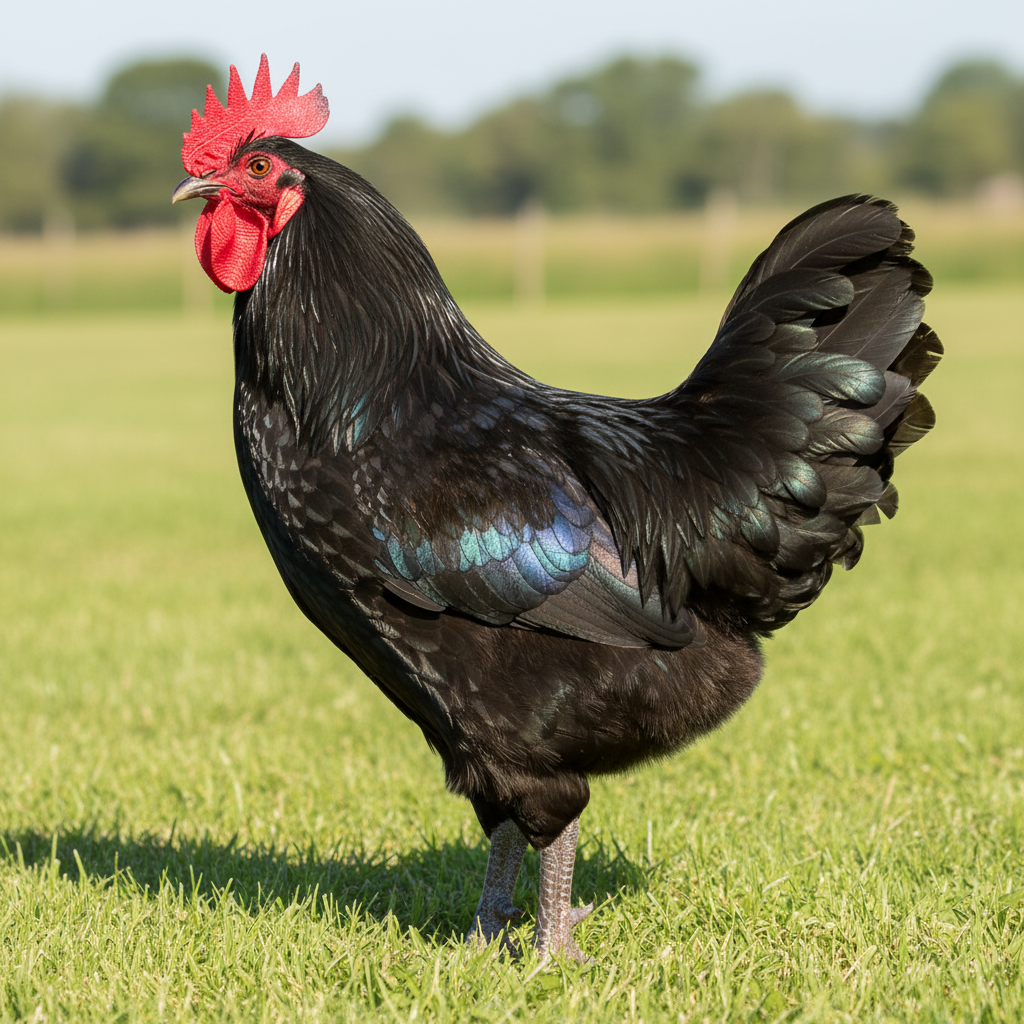
Jersey Giants are known for their impressive size, standing as the largest pure chicken breed. They have a calm and friendly temperament, making them great for families. Their feathers can be black, blue, or white, with a deep breast and broad back. This size and gentle nature make them unique among dual-purpose breeds.
History
The Jersey Giant was developed in the United States in the late 19th century by Pennsylvania breeders. They aimed to create a large bird capable of providing meat while still laying a decent number of eggs. The breed quickly gained popularity and spread throughout the country due to its usefulness on small farms.
Care tips
Jersey Giants are hardy and adapt well to various environments, but they do require ample space to roam due to their large size. They are not known to be broody; however, they thrive on social interaction. A balanced diet is crucial to support their growth and egg production.
Color varieties
Fun facts
- Jersey Giants can weigh up to 13 pounds, making them incredibly heavy for a chicken.
- They were originally bred to replace turkeys as a meat source in the U.S.
- Jersey Giants are good layers, producing around 150-200 brown eggs per year.
- Their calm demeanor makes them excellent pets and great with children.
Living with Jersey Giants day to day
Jersey Giants are the biggest American chicken breed, and you feel that the first time you pick one up. A grown rooster can weigh around 13 pounds and a hen around 10. They were developed in New Jersey in the late 1800s, mostly from Javas, Langshans and Brahmas, with the idea of making a large roasting bird. The Cornish cross later took over that job because it grows so much faster, which is why the Giant is now mostly a backyard and homestead bird.
Day to day, most keepers find them calm and easygoing. They are not quick, they are not flighty, and many hens will let you scoop them up without much fuss. Roosters are usually mellow for their size, though a 13 pound bird that does decide to be rude is a lot to handle, so it pays to choose a gentle one.
Slow to grow, slow to lay
The thing that surprises new owners is how long Jersey Giants take to mature. They put on frame first and fill out later, and many need well over six months before they look finished. Pullets often start laying later than lighter breeds. Once they start, expect large brown eggs at a steady but not record pace. They tend to keep laying fairly well through cooler months, then slow down during the molt and in their later years like any heritage breed.
Space, roosts and nest boxes
Plan your coop around their size, not the average hen. Give them more floor space per bird than you would for a standard breed, wider pop doors, and roomy nest boxes so they are not squeezing in and cracking eggs. Keep roosts low. Heavy birds jumping down from a high bar land hard, and that is one of the ways leg and foot problems like bumblefoot start. A broad, flat roost is easier on their feet than a thin round dowel. Fences can be lower than for flighty breeds, since Giants rarely fly.
Climate notes
Their size and thick feathering make them very cold-hardy. Big single-combed roosters can still get frostbite in hard freezes, so good ventilation without drafts matters. Heat is the bigger concern, especially for the black variety. In hot summers give them deep shade, airflow and plenty of cool water.
How they compare
The breed most often lined up against the Giant is the Brahma. Both are big and gentle, but Brahmas have feathered feet and usually a pea comb, while Giants are clean-legged with a single comb. There is a full Brahma vs Jersey Giant comparison if you are choosing between them. If you mainly want eggs from a calm black bird, an Australorp matures faster and usually lays more.
Where to get them
Black Jersey Giants are easy to find from big US hatcheries, and white ones are fairly common too. Blue birds are offered by some hatcheries and breeders. If you want birds close to the show standard in size and type, look for a breeder who exhibits at poultry shows. Hatchery birds are often smaller than the standard describes. The breed has appeared on the Livestock Conservancy priority list in the past, so buying from heritage breeders helps keep good lines going.
Common questions about Jersey Giants
Are Jersey Giants good layers?
They are fair layers of large brown eggs. They are not in the same league as production breeds, and they start later than most, but they are steady once going.
How long until a Jersey Giant is full grown?
Much longer than most breeds. Many keep filling out until they are close to a year old, especially roosters.
Are Jersey Giants good with kids?
Usually yes. Hens tend to be calm and tolerant. Just teach kids to support the whole body, since these birds are heavy and can hurt themselves if dropped.
