

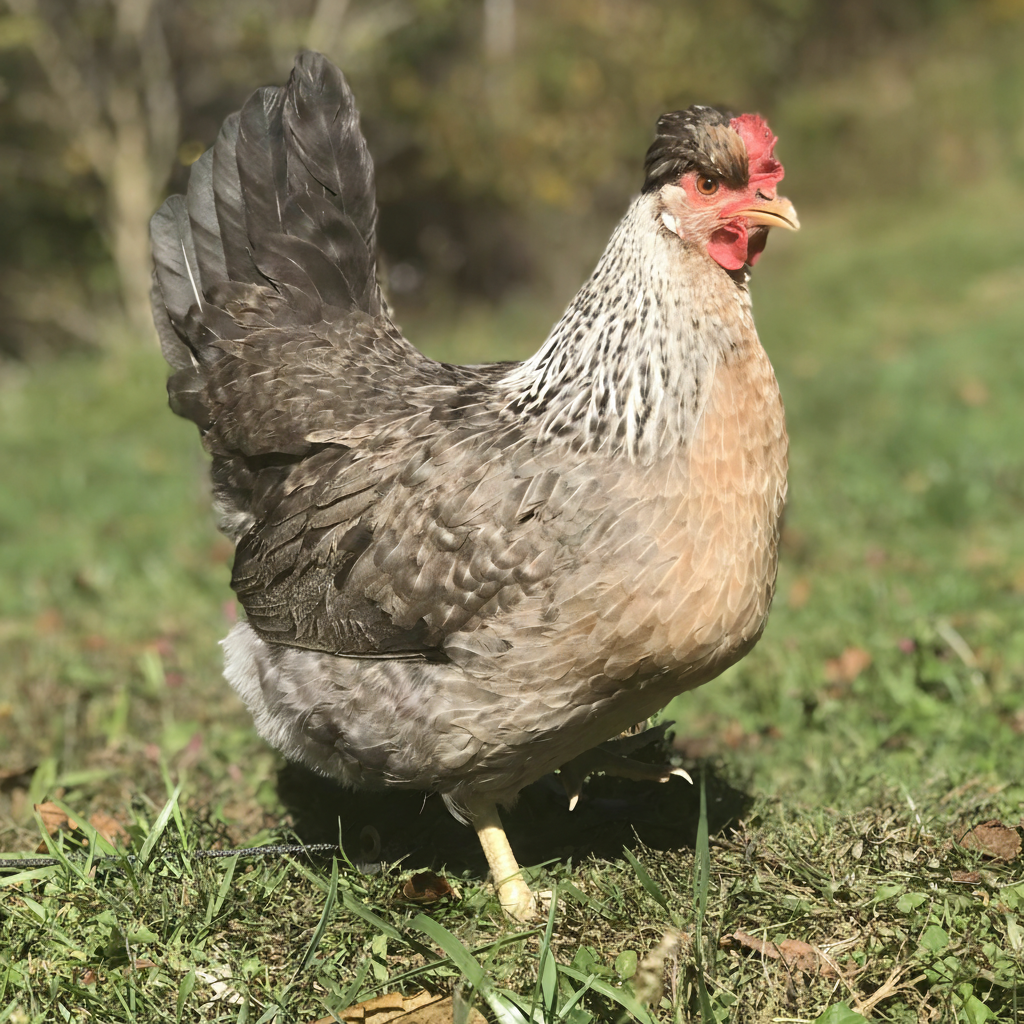
About the Cream Legbar
Cream Legbars display a striking appearance with their attractive plumage that includes hues of cream and gold. They are known for their friendly and sociable nature, making them great companions in the backyard. One of their most distinctive traits is their ability to be sexed at hatching due to feather color differences. This breed is also recognized for its active help in pest control while foraging.
History
The Cream Legbar was developed in the 1930s in Cambridge, England, by crossing the original Legbar breed with other breeds such as the Araucana and other local fowl. This breed gained popularity in various countries due to its unique egg color and auto-sexing trait, which allows for easy identification of male and female chicks.
Care tips
Cream Legbars are generally hardy but should be protected from extreme weather due to their medium size. They thrive in free-range environments where they can forage for insects and plants. Regular health checks are crucial since their active nature can sometimes lead to minor injuries. They may exhibit broody behavior, so providing nesting boxes is advisable.
Color varieties
Fun facts
- Cream Legbars were first recognized by the British Poultry Standard in 1958.
- Chicks can be identified as male or female almost immediately after hatching.
- They have a calm temperament, making them suitable for family backyards.
- Their unique blue eggs can sometimes vary in shade, ranging from light to dark blue.
What life with Cream Legbars is like
The Cream Legbar was developed in Britain, at Cambridge, in the mid 20th century. It was bred from Leghorns, Barred Rocks and Araucana-type birds to combine three things. It is autosexing, so chicks can be sexed at hatch. It lays blue eggs. And it carries a small crest at the back of the head.
Adult hens are a soft mix of cream, gray and salmon, with a small crest. Roosters are lighter, barred and cream with a taller crest. Most Cream Legbars are active, alert and good foragers. Some are flighty, especially young birds, but many settle into friendly backyard birds.
Autosexing chicks
This is the biggest selling point. Female chicks usually have a clear dark brown stripe down the back with defined edges, like a chipmunk. Male chicks are lighter, with a blurred, faded stripe and often a light head spot. It takes a little practice, so compare chicks side by side.
Eggs through the year
- Good layers of blue to blue-green eggs.
- Egg size is usually medium.
- Broodiness is rare, so hens keep laying through the season.
- They lay best in spring and summer and slow in winter.
Egg color varies between lines. Some lay a clear sky blue, others more of a green tint. The blue egg page lists other breeds in the same range.
Space and climate
Give them standard large fowl space and room to roam. They fly well, so cover the run if needed. Their single comb is prone to frostbite in very cold, damp weather, so keep the coop dry and ventilated. Summer heat is manageable with shade and cool water.
Cream Legbar vs Ameraucana
The Ameraucana is another blue egg breed. It has a pea comb, beard and muffs, which makes it better in cold weather. Cream Legbars are usually more productive and autosexing, which Ameraucanas are not. Hatchery quality varies, so if autosexing matters, buy from a breeder who selects for it.
Where to buy
Cream Legbars have grown popular in the US. Many breeders and some hatcheries sell them. Prices are higher than for common layers.
Common questions about Cream Legbars
Do Cream Legbars lay blue eggs?
Yes. They lay blue to blue-green eggs.
Can I sex Cream Legbar chicks?
Yes. Females have a dark, defined back stripe. Males are lighter and blurrier.
Are Cream Legbars friendly?
Many are friendly, though some are flighty, especially when young.
