

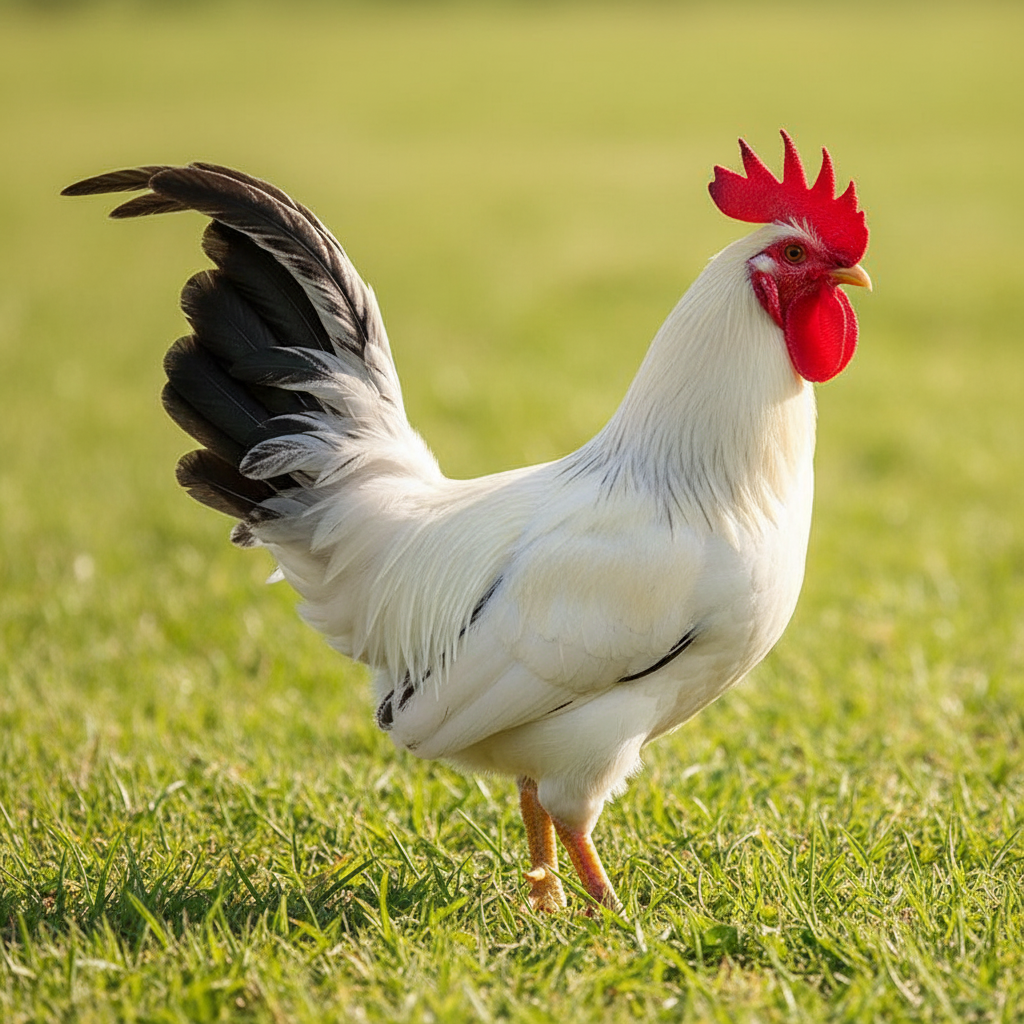
Black Tailed White Japanese Bantam
The Black Tailed White Japanese Bantam is a striking ornamental breed with a unique appearance.
Is the Black Tailed White Japanese Bantam right for you? Take the Breed Matcher →About the Black Tailed White Japanese Bantam
The Black Tailed White Japanese Bantam is characterized by its distinctive white plumage and black tail feathers. Its small size and elegant stature make it a favorite among collectors and those interested in ornamental breeds. These birds have a friendly temperament and enjoy being around people, which makes them suitable for backyard settings. Their unique appearance, along with their charming personality, adds beauty to any flock.
History
The breed was developed in Japan and is thought to have originated from the traditional Japanese bantams. It gained popularity in the 20th century and was brought to other countries through exhibitions and interest in ornamental poultry. The breed has since garnered a following among enthusiasts for its striking look and compact size.
Care tips
Black Tailed White Japanese Bantams are hardy but should be provided with shelter from harsh weather conditions. They require ample space to roam and forage, and their friendly nature often leads them to become more docile when handled regularly. Keep in mind that they may go broody, so monitor nesting habits closely if you are looking to collect eggs.
Fun facts
- They are known for their striking contrast between white feathers and black tails.
- Black Tailed White Japanese Bantams are often seen in poultry shows due to their beauty.
- These birds are friendly and enjoy interacting with their keepers.
- Their small size makes them a great option for limited backyard spaces.
The most recognized Japanese Bantam color
Black Tailed White is the variety many people picture when they hear "Japanese Bantam." The body is white, the tail is black, and the tail feathers usually carry white edging. Set on a very short-legged bird with a tall upright tail and a big red comb, it is one of the most eye-catching bantams at any show.
How it relates to the parent breed
This is a color of the Japanese Bantam, also known in Japan as Chabo. All the breed traits come along with it.
- A true bantam, with no large fowl version.
- Short legs from a gene that is lethal in double dose, so short to short pairings lose about a quarter of embryos.
- Small cream or tinted eggs in modest numbers.
- Friendly temperament and frequent broodiness.
Keeping the white clean
White birds show dirt quickly, and Japanese sit so low that their feathers almost touch the ground. Dry bedding, a well-drained run and regular cleaning keep them looking good. If you plan to show, many keepers keep them on clean shavings for weeks beforehand. Strong sun can yellow white feathers in some birds, so give shade.
Climate and coop
The big single comb is the weak spot in cold weather. A coop that is dry, ventilated and out of drafts lowers frostbite risk. They handle warm weather well with shade. Their size suits small coops and small yards.
Where to find them
This is the easiest Japanese color to find. Many hatcheries sell it, and most Japanese breeders keep it.
Common questions about Black Tailed White Japanese Bantams
Are Black Tailed White Japanese good with kids?
Usually yes. They are small, calm and easy to tame.
Why are some of my chicks long-legged?
Breeders often cross short and long-legged birds to avoid the lethal short-leg combination.
How many eggs do they lay?
A modest number of small eggs, with breaks for broodiness.
